Child Diagnosed With Autism: What I Wish I Knew Sooner
If you’re reading this shortly after hearing “your child is autistic,” I want to say the thing I needed most in that first week: this diagnosis is not a goodbye to the future you imagined. It’s a new way of understanding the beautiful child you already have. I still remember the day we received the diagnosis, and I still remember how much I wish someone had told me that sooner.
Quick Takeaways
- The diagnosis does not change your child — it changes how clearly you can see and support them
- You do not need to become an expert overnight; you only need the next step, not every step
- Progress with an autistic child often looks different — celebrate it on its own terms, not against another child’s timeline
- Comparing your child to other autistic children usually comes from love, not doubt, but it rarely helps either of you
- Autism is a spectrum, and even within it, no two children have the same journey, strengths, or timeline
The Day My World Felt Like It Changed Forever
I still remember the day we received the diagnosis. I walked into that appointment carrying so many questions, but I never imagined how much one conversation would change the way I looked at my child’s future.
When I heard the words “your child is autistic,” everything suddenly felt quiet. I looked at my child sitting beside me, playing and being themselves, and I remember thinking, how can this diagnosis describe my entire child?
My child was still the same little person who smiled when I walked into the room. Still the same child who loved certain toys, laughed at silly things, and had their own beautiful personality. But suddenly, my mind was filled with fear. I started thinking about things that had not even happened yet.
Would my child ever say “I love you”? Would my child have friends? Would other people understand them? Would they be happy?
Those questions kept me awake at night. I searched the internet looking for answers, but many things I found only made me more scared. I read stories about challenges, but I did not read enough about hope. I did not read enough about the small victories that mean everything to an autism parent.
The first thing I wish someone had told me is this: your child’s autism diagnosis is not a goodbye to the future you imagined. It is a new way of understanding the beautiful child you already have.
I Wish Someone Had Told Me I Did Not Have to Have All the Answers
After my child was diagnosed with autism, I felt like I suddenly had a huge responsibility to become an expert overnight. I wanted to know everything. I wanted to know the best therapy, the best school, the best treatment, and exactly what my child’s future would look like. I thought if I could find enough information, I could remove all uncertainty.
But I slowly learned something important. I did not need to know everything on the first day. I only needed to take the next step.
Some days that meant making a therapy appointment. Some days it meant learning a new way to communicate with my child. Some days it simply meant sitting beside my child and enjoying the moment instead of worrying about tomorrow.
If you’re in the research-everything phase right now, that’s normal, and it’s also okay to put it down for an evening. The next step is usually smaller than it feels.
My Child Did Not Change After the Diagnosis — I Did
Before the diagnosis, I often focused on the things my child was not doing. I noticed the words they were not saying. The milestones they had not reached. The things that seemed harder for them than other children.
But after learning more about autism, something inside me changed. I started noticing the things my child could do. I noticed the way my child smiled when hearing a favorite song. I noticed how focused they became when playing with something they loved. I noticed small attempts to communicate that I had missed before.
The diagnosis did not change my child. It changed the way I saw my child.
The Small Victories That Only Autism Parents Understand
One thing nobody told me is that progress looks different when you are raising an autistic child. Sometimes the biggest celebrations are things other people may not understand.
- A first word
- A new gesture
- Making eye contact for a moment
- Trying a new food
- Playing near another child
- Asking for something instead of becoming frustrated
To someone else, these moments may seem small. But to an autism parent, they can feel like the biggest victories in the world.
I learned not to measure my child’s progress against someone else’s timeline. My child was not behind. My child was simply walking a different path.
The Hardest Part Was Comparing My Child to Other Children With Autism
Learning That Every Autistic Child Has Their Own Journey
One of the hardest things I experienced after my child was diagnosed with autism was learning not to compare.
At first, I thought finding other families with autistic children would make me feel better. I joined groups, watched videos, and read stories from other parents. I wanted to learn from them. I wanted hope.
But sometimes, instead of feeling encouraged, I felt more worried. I would see another child with autism who started talking at two years old, while my child was still struggling to communicate. I would see another child learning new skills quickly, and I would wonder why my child’s progress looked different. I would read stories about children who went through therapy and reached certain milestones, and I would quietly ask myself:
“Will my child ever get there?” “Am I doing enough?” “Why does my child’s journey look so different?”
Those thoughts were painful because they came from love. I was not comparing because I wanted my child to be someone else. I was comparing because I wanted my child to have every opportunity possible.
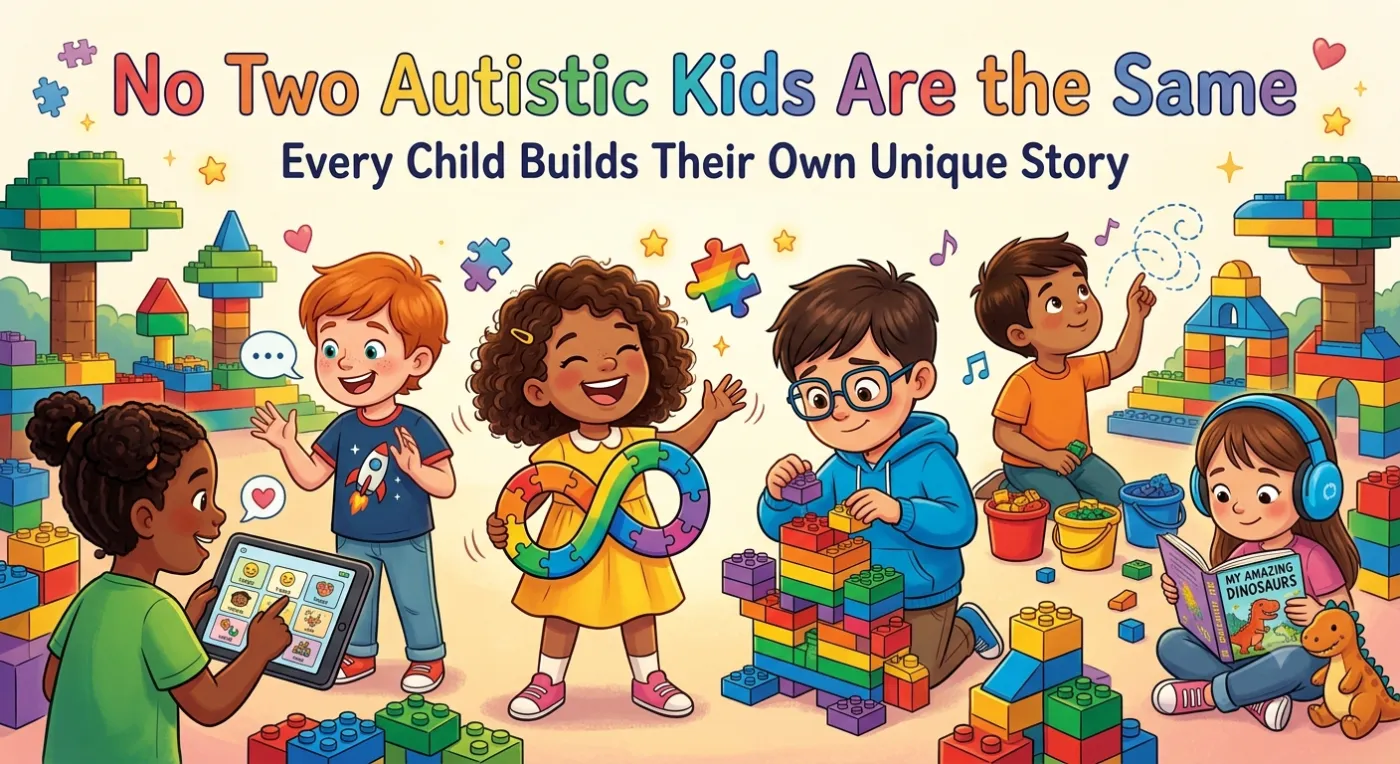
But over time, I learned something that changed my perspective. Autism is a spectrum, but even within that spectrum, every child has their own unique story. Two children can both have an autism diagnosis and still have completely different strengths, challenges, personalities, and timelines.
One child may speak early but struggle with sensory challenges. Another child may take longer to communicate but have incredible memory and problem-solving skills. One child may love social interaction but struggle with changes in routine. Another child may prefer quiet spaces but have a deep ability to focus on things they love.
There is no single autism journey — and once I stopped measuring my child against someone else’s, I finally had room to see the progress that was actually happening in front of me.
What Actually Helped Us Move Forward
Looking back, a handful of small, unglamorous changes did more for our family than any amount of late-night researching ever did:
- Getting an evaluation started early, even before we had every answer, so services could begin while we were still figuring things out
- Adding visual structure to our day — a simple picture schedule reduced meltdowns more than any conversation ever could, because it took the pressure off my child to understand my words in the moment
- Following our child’s interests instead of redirecting away from them, since the deepest connection and the most language often showed up around the things they already loved
- Finding one other parent who understood, whether through a local group or an online community, so I had somewhere to say the hard, honest things out loud
- Letting go of the parenting scripts I’d absorbed from other families, because most of them were written for children who process the world differently than mine
None of these fixed everything overnight. But together, they turned a lot of the fear into something more manageable: a plan, one step at a time.
Practical First Steps If You’ve Just Received a Diagnosis
If you’re early in this and not sure where to start, this is roughly the order that helped us:
- Ask about early intervention services. In the U.S., these are typically available for children under 3 based on evaluated need, not a finalized diagnosis, and many services are free or low-cost.
- Request a referral to a developmental pediatrician, speech-language pathologist, or occupational therapist, depending on what your child’s evaluation flagged.
- Start one small structural change at home, like a visual schedule or a predictable routine, before trying to change everything at once.
- Find your people — a support group, an online community, or even one other parent — before you need them in a crisis.
- Give yourself the same grace you’re learning to give your child. You are also allowed to have a different timeline than the parent next to you.
What I Would Tell a Parent on Day One
If I could sit across from myself on the day of that diagnosis, I would say this: your fear is not a sign that something is wrong with you, it’s a sign that you love your child fiercely. Let it move through you, and then let it go to work — into research, into advocacy, into patience. Your child is not less than the child you imagined. They are simply, specifically, themselves, and getting to know that person is its own kind of gift.
Frequently Asked Questions
Is it normal to feel afraid after my child’s autism diagnosis?
Yes. Fear after a diagnosis is one of the most common reactions parents describe, and it usually comes from love and uncertainty about the future, not from anything being wrong with your response. Most parents find the fear softens as they get concrete next steps and start to see their child’s individual progress.
Will my child’s personality change because of the diagnosis?
No. A diagnosis describes how your child’s brain processes the world — it does not change who they already are. The child who smiled at you yesterday is the same child today; the diagnosis simply gives you a clearer framework for understanding and supporting them.
How do I stop comparing my child to other autistic children?
It helps to remember that autism is a spectrum with enormous individual variation — two children with the same diagnosis can have completely different strengths and timelines. Try tracking your own child’s growth against their own past self instead of against another child’s milestones.
What should I do first after receiving an autism diagnosis?
Start with an early intervention or developmental services referral, since many programs are available based on evaluated need rather than a finalized diagnosis. From there, add one small supportive change at home, like a visual routine, while you wait for specialist appointments.
Do I need to have a treatment plan figured out immediately?
No. You only need the next step, not the entire path. Most families build their approach gradually, adjusting as they learn more about their child’s specific strengths and needs.
Conclusion
The diagnosis did not take my child away from me — it gave me a clearer lens for understanding who they already were. If you’re standing where I stood, still scared, still awake at night with unanswered questions, know that the fear does soften, the small victories do come, and your child’s journey was never meant to look like anyone else’s. You don’t need every answer today. You just need the next step.
If you’re also navigating early communication differences, our guide on autism vs. speech delay in toddlers walks through how pediatricians tell the two apart, and toddler not talking at 2 covers what to expect from an evaluation. For sensory differences specifically, sensory play ideas by age has practical, low-cost ways to support regulation at home. And if you want the concrete, step-by-step version of everything to do next — early intervention, insurance, school rights, and more — see what to do after an autism diagnosis.
Sources:
- Centers for Disease Control and Prevention (CDC) — Autism and Developmental Disabilities Monitoring (ADDM) Network
- American Academy of Pediatrics (AAP) — Autism Spectrum Disorder screening and early intervention guidance
- Autism Speaks — Family support and early intervention resources
Comments