My 4-Year-Old Autistic Son Isn't Talking Yet — You Are Not Alone
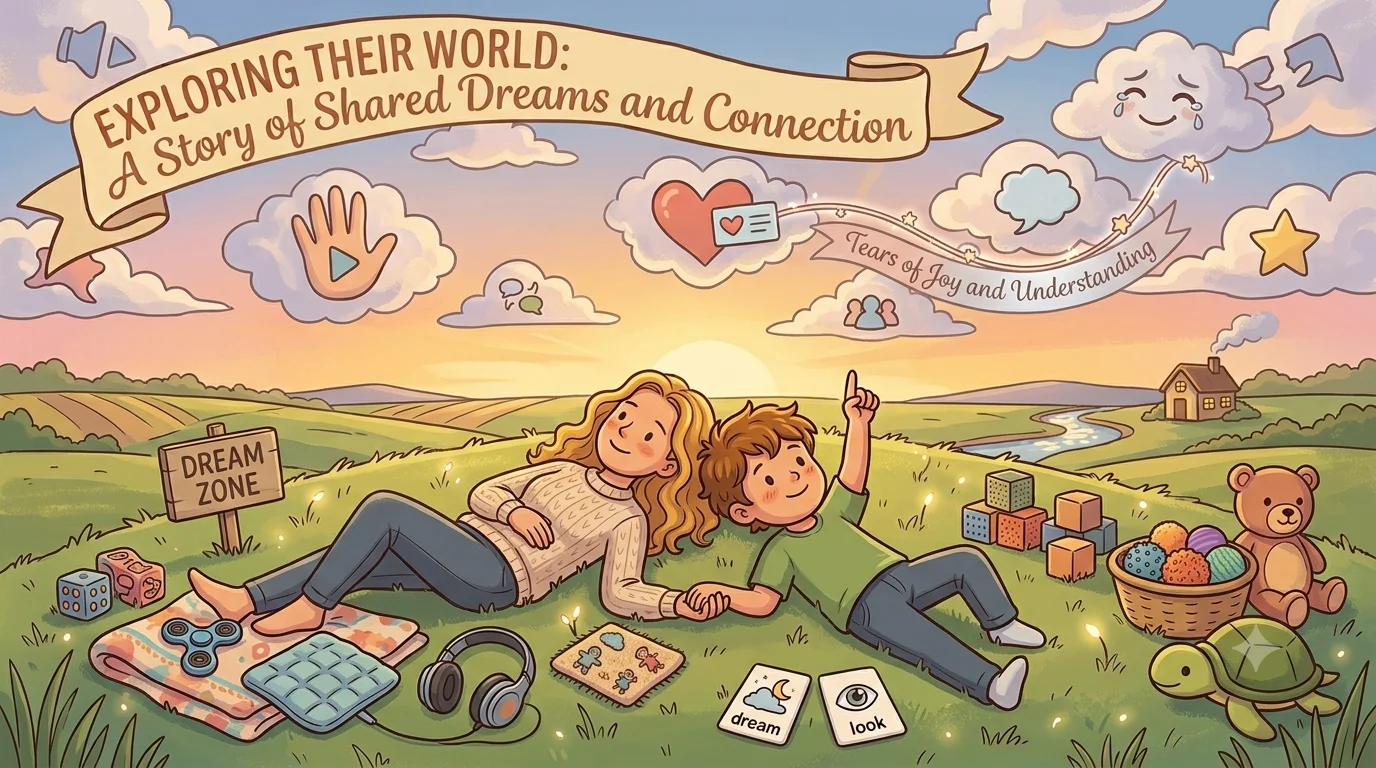
Some days, I wonder what it would feel like to hear my son look into my eyes and say, “Mom.” He is four years old. Every morning I wake up hoping today will be different — maybe today he will surprise me, maybe today he will say one meaningful word, not just a sound, not just babbling, just one word with a purpose. But the day ends, and that word never comes. If you’re an autism parent reading this with tears in your eyes, I want you to know something before you read another sentence: you are not alone.
Quick Takeaways
- Many autistic children are still nonverbal or minimally verbal at 4, and speech can still develop well beyond this age
- The waiting is its own unique exhaustion — separate from, and often heavier than, the day-to-day work of therapy
- Guilt (“did I do enough today?”) is nearly universal among parents of late-talking autistic kids, and it isn’t a sign of failure
- Communication is bigger than spoken words — eye contact, gestures, AAC, and signs all count as real progress
- Kindness from others matters more than advice; “how are you doing?” helps more than “why isn’t he talking?”
The Waiting No One Can Truly Understand
People often ask, “Is he talking yet?” They don’t realize how heavy those four simple words can feel.
They don’t see the speech therapy appointments, the occupational therapy sessions, the hours spent repeating the same words, pointing to pictures, celebrating tiny steps that most people never notice. They don’t see a mother whispering “Mama” hundreds of times, hoping one day her child will whisper it back.
The waiting is exhausting — not because we expect perfection, but because we dream about one simple moment that many families experience without even thinking about it.
Every Parent Dreams of Hearing Their Child Speak
Before I became an autism mom, I imagined little conversations. I imagined hearing, “Mom, come play.” “I love you.” “I’m hungry.” “I’m tired.”
I never imagined that one meaningful word would become my biggest dream. Not expensive gifts. Not a perfect life. Just one word.
The Guilt That Lives Quietly Inside an Autism Mom
Some nights I ask myself questions that never seem to have answers. Did I do enough today? Should I have practiced more? Should I have found another therapy? Could I have done something differently?
Deep inside, I know autism doesn’t happen because a parent didn’t try hard enough. But a mother’s heart doesn’t always listen to logic. It simply wants to help her child.
Watching Other Children Can Break Your Heart
Birthday parties. The playground. Preschool. Sometimes another child runs to their mother shouting, “Mom!” And for just a second, my heart breaks — not because I’m jealous, but because I wonder what it will feel like when my son finally says it. That tiny word means everything to me.
This is one of the quiet parts of the isolation so many families describe — you can be surrounded by other parents and still feel like no one understands what you’re carrying. If that sounds familiar, why autism parents feel isolated is worth reading next.
Progress Doesn’t Always Sound Like Words
Autism has taught me something I never expected: communication is bigger than speech.
My son may not say meaningful words yet. But he smiles. He hugs me in his own way. He trusts me. He reaches for my hand. He laughs when he’s happy. Those moments remind me that love doesn’t always need words. Sometimes love is simply being there.
If you’re trying to figure out whether what you’re seeing is a true speech delay or something more, autism vs. speech delay in toddlers breaks down the differences we wish someone had explained to us earlier.
To Every Parent Waiting for the First Meaningful Word
If your child is four, or five, or six, and you’re still waiting, please don’t think you’re alone. Some children speak later. Some communicate through gestures, pictures, signs, or AAC devices. Every child’s journey is different. Progress may look different than you imagined, but progress is still progress. Never compare your child’s timeline with another child’s story.
What I’ve Learned on This Journey
Autism has changed me. It has made me more patient, more compassionate, more grateful for tiny victories: a few seconds of eye contact, a new gesture, following one instruction, looking at me with trust. These moments may seem small to the world. To me, they are unforgettable.
If You Know an Autism Parent, Please Be Kind
Instead of asking, “Why isn’t he talking?” try asking, “How are you doing?” Instead of giving advice that wasn’t requested, offer understanding. Sometimes parents don’t need solutions. They simply need someone who will sit beside them without judgment. Kindness is a gift every autism family deserves.
You Are Not Failing
If you’re reading this while wondering whether you’re doing enough, please hear this: you are showing up. You keep trying. You celebrate the smallest victories. You carry hope even on the hardest days. That is love. And your child is lucky to have you.
Final Thoughts
I still dream of hearing my son say his first meaningful word. Maybe it will happen tomorrow. Maybe next month. Maybe years from now. I don’t know when that day will come. But until then, I will keep believing in him. I will keep learning. I will keep loving him exactly as he is.
And if you’re walking this same road, I hope you know that somewhere, another parent is waiting too. We may not know each other. But we understand each other’s hearts. You are not alone.
Frequently Asked Questions
Is it common for a 4-year-old autistic child to still be nonverbal?
Yes. Some autistic children develop meaningful speech later, while others communicate through gestures, sign language, picture systems, or AAC devices. Every child develops at their own pace.
Can nonverbal autistic children learn to communicate?
Yes. Communication can happen in many ways besides spoken words. Speech therapy, AAC, PECS, gestures, and consistent support can help children express their needs and feelings.
How can parents stay hopeful?
Focus on small steps instead of comparing your child with others. Celebrate every new skill, no matter how small. Progress is meaningful, even when it looks different from what you expected.
What is the hardest part for many autism parents?
For many families, it isn’t just the speech delay. It’s the waiting, the uncertainty, and feeling misunderstood by people who don’t see the daily effort behind every small achievement.
What would you like other people to understand?
Please don’t judge a child’s progress by how many words they can say. Every autistic child has their own strengths, challenges, and timeline. A little kindness and understanding can mean the world to an autism family.
Conclusion
If you’re the parent of a four-year-old who still hasn’t said a meaningful word, please know this isn’t the end of the story — for many kids, it’s still an early chapter. If you’re earlier in this journey and still processing the diagnosis itself, what I wish I knew after an autism diagnosis covers the fear and comparison that often come first. And if the future feels like the heaviest part of the waiting, the fear autism parents carry about the future may put words to what you’re feeling too.
Somewhere in the world, another parent is waiting for their child’s first word too. We may not know each other, but we understand each other’s hearts. You are not alone.
Sources:
- Centers for Disease Control and Prevention (CDC) — Autism and Developmental Disabilities Monitoring (ADDM) Network
- American Academy of Pediatrics (AAP) — Autism Spectrum Disorder communication guidance
- American Speech-Language-Hearing Association (ASHA) — AAC and late language emergence resources
Comments