Why Autism Parents Feel Isolated (And Why You're Not Alone)
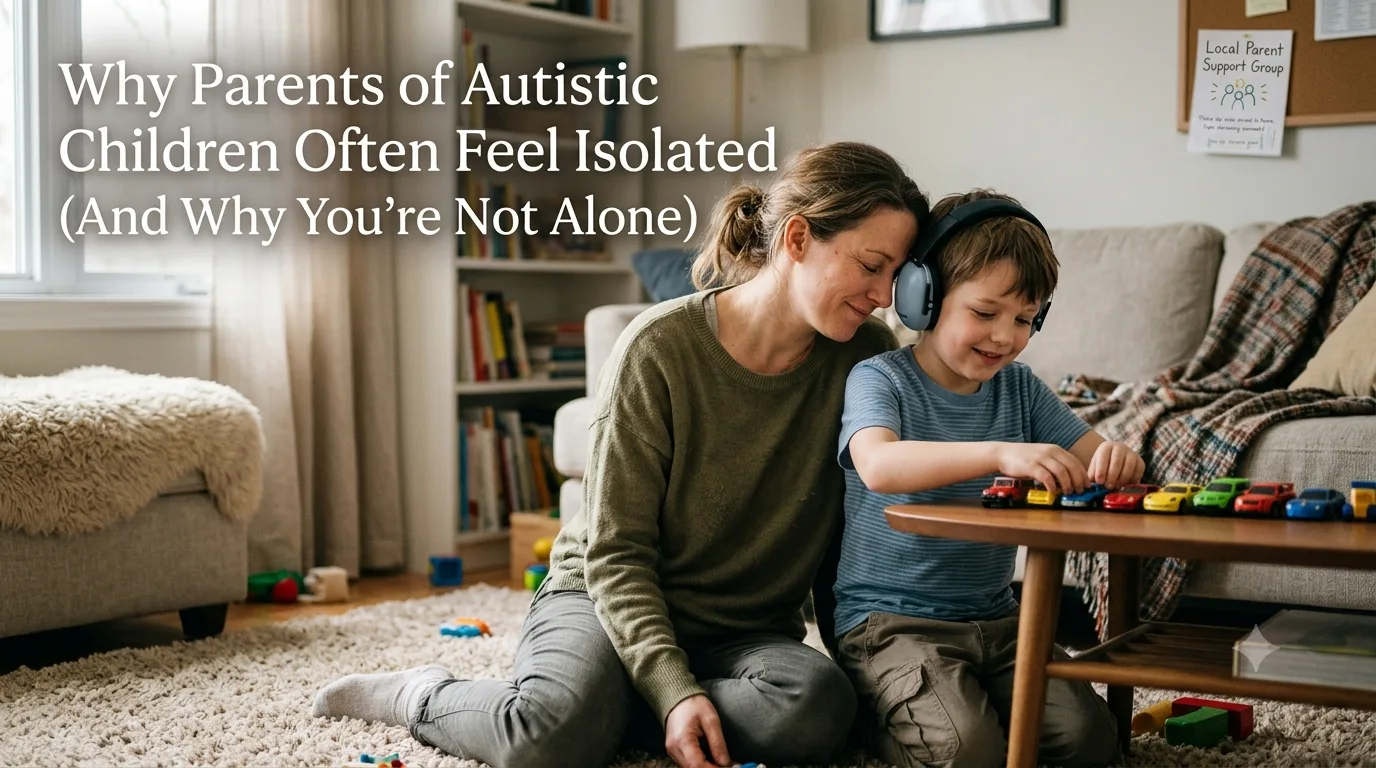
I never imagined that one of the hardest parts of raising an autistic child would not be the therapy appointments, the paperwork, the endless research, or even the sleepless nights. It would be the loneliness. If you are the parent of an autistic child and you have slowly stopped going to birthday parties, family gatherings, or simple outings because you worry about how people will react, I want you to know something before you read any further: you are not alone.
Quick Takeaways
- Autism parent isolation rarely happens all at once — it builds slowly, one skipped event at a time
- Innocent-sounding questions from others (“has he tried being stricter?”) can still land as judgment
- The guilt of canceling plans or leaving early is common, and it doesn’t mean you’re failing your child
- Your child can feel the isolation too — crowded, loud, unpredictable spaces are often the real barrier
- Finding even one other parent who understands can undo years of feeling alone
The Loneliness Doesn’t Happen All at Once
When my child was first diagnosed with autism, I thought the hardest part would be learning about autism itself — understanding therapies, learning about communication, finding the right support, figuring out what the future would look like.
But I slowly realized something I never expected. The hardest part was not autism itself. The hardest part was feeling like the world around us didn’t always understand it.
At first, we continued living normally. We accepted invitations, went to birthday parties, visited family, went shopping on weekends. We tried to do everything every other family did. But little by little, every outing became emotionally exhausting — not because my child was doing something wrong, but because I was constantly worried about how other people would react.
Would someone stare? Would someone make a comment? Would someone misunderstand my child’s behavior? Would someone think I was a bad parent?
Slowly, without even realizing it, we started saying, “Maybe we’ll stay home today.” One missed event became two. Two became months. And before I knew it, our world became much smaller.
The Questions People Ask Without Realizing They Hurt
Most people don’t ask questions because they want to hurt us. Many are simply unaware. But sometimes, even innocent questions can leave a deep wound.
“Why isn’t your child talking yet?” “Why does he move his hands like that?” “Is he always going to be like this?” “Have you tried being stricter?” “He doesn’t look autistic.”
Each time I heard comments like these, it felt like people were judging more than my child — it felt like they were judging me. They didn’t see the hours spent researching therapies, the appointments, the difficult nights, the moments when I cried quietly because I didn’t know what else I could do. They saw only a few minutes of our life and thought they understood the whole story.
When People Stare, It Hurts the Most
The hardest part is not when strangers stare at me. It is when they stare at my child.
My child stims. Sometimes he flaps his hands. Sometimes he makes sounds when he is excited. Sometimes he jumps because he is happy. Sometimes he covers his ears because the world feels too loud. To me, these are not problems — they are parts of who he is, the ways he communicates and experiences the world.
But for some people, these differences become something unusual to watch. I’ve seen people stare, seen people whisper, seen children ask questions while adults quickly pulled them away instead of teaching them that differences are normal. As a parent, that moment hurts, because every parent wants their child to feel accepted and to feel like they belong.
My Child Felt the Isolation Too
One day, I realized something that broke my heart: it wasn’t only me avoiding the world. My child was also struggling with it.
Crowded birthday parties became overwhelming. Restaurants became difficult. Family gatherings became exhausting. The sounds, lights, conversations, and unexpected changes were sometimes too much. Sometimes he covered his ears. Sometimes he wanted to leave. Sometimes he simply wanted the comfort of home.
People might think he was being difficult. But I knew the truth — the world was simply louder, faster, and more overwhelming for him. This is one of the reasons sensory play ideas by age can help so much at home: they give kids practice regulating in a low-stakes setting before facing a harder one.
When Staying Home Feels Easier Than Explaining
Eventually, I started saying no more often — no to gatherings, no to certain outings, no to events I knew would become stressful. Not because I didn’t want to be part of the world, and not because my child was doing anything wrong, but because constantly explaining, worrying, and preparing became exhausting.
Sometimes staying home felt easier than answering questions. Easier than dealing with judgment. Easier than watching people misunderstand my child.
The Invisible Guilt Autism Parents Carry
Autism parents often carry a type of guilt that many people never see. We feel guilty for leaving early. Guilty for canceling plans. Guilty when our child struggles. Guilty when we feel tired. Guilty when we need time for ourselves.
And even after doing everything we can, we still ask ourselves: “Am I doing enough?”
The truth is, if you are showing up every day for your child, learning, advocating, and loving them exactly as they are, you are already doing something incredibly important.
The World Keeps Moving, But You Are Not Standing Still
There are moments when it feels like everyone else’s life continues moving forward — kids joining sports teams, going to sleepovers, making new friends, celebrating milestones — while you are sitting at therapy appointments, filling out insurance paperwork, preparing for IEP meetings, researching the next support your child needs.
Sometimes it feels like your family is standing still. But you are not standing still. You are walking a different path — one that requires patience, strength, and a kind of love many people never experience.
The Small Victories Only Autism Parents Understand
The world celebrates big achievements. Autism parents celebrate moments that others may never notice.
- Some parents celebrate a report card. We celebrate making eye contact.
- Some parents celebrate a sports trophy. We celebrate hearing a new word.
- Some parents celebrate a perfect family vacation. We celebrate trying a new food.
- Some parents celebrate a birthday party. We celebrate getting through a grocery store trip successfully.
These moments may look small to others. But we know how much courage, effort, and growth they represent.
What I Wish People Understood About Autism Families
I don’t want pity, and I don’t want people to treat my child differently because they feel sorry for him. I simply want understanding.
If my child is having a difficult day, please don’t assume I am a bad parent. If he is stimming, please don’t stare. If he covers his ears, understand that something you don’t notice may feel overwhelming to him. If we leave early, please know we are not being rude — we are simply trying our best. A little kindness can completely change a family’s day.
Finding Other Autism Parents Changed Everything
For a long time, I felt like nobody truly understood. Then I met other autism parents, and something changed. For the first time, I didn’t have to explain everything. I didn’t have to apologize. I didn’t have to explain why we left early. They simply understood. They smiled and said, “We’ve been there too.”
Sometimes those four words are exactly what a tired parent needs to hear.
It’s Okay If Your Circle Becomes Smaller
One thing autism has taught me is that it reveals who truly stands beside you. Some people slowly disappear. Others surprise you and become your strongest supporters.
Your circle may become smaller. But sometimes, it becomes more meaningful. The people who stay are the people who accept your child completely, and those are the people worth holding onto.
Where to Find Your People
If you’re not sure where to start looking for community, a few places tend to work well:
- Early intervention or school programs — parent coordinators often know of local support groups tied to your child’s services.
- Online communities built specifically around autism parenting, where you can be anonymous at first if that feels safer.
- Your child’s therapy team — many speech, OT, and ABA providers can point you toward parent meetups they know personally.
- One honest conversation with another parent you already sense might understand, even before you know their child’s diagnosis.
You don’t need a large group. Often, one parent who truly gets it is enough to make the loneliness bearable.
To the Parent Reading This After a Difficult Day
Maybe you are reading this after another exhausting day. Maybe someone stared at your child in public. Maybe someone made a comment that stayed in your mind all day. Maybe you skipped another invitation because you knew it would be too overwhelming.
I want you to know: I see you. I understand you. Not because I learned about autism from a book, but because I have lived those moments too. I have had those difficult days. I have questioned myself. I have wondered if people would ever truly accept my child.
And if you feel alone today, remember this: you are not failing. You are carrying something many people cannot see. And despite everything, you continue showing up for your child every single day. That is strength.
Finding Hope Again
Over time, I learned something important. I cannot control every person’s reaction. I cannot stop every insensitive comment. I cannot make everyone understand autism. But I can choose love over fear. I can celebrate my child’s progress instead of comparing him to others. I can stop apologizing for who my child is.
Most importantly, I can teach my child that he never needs to change who he is just to make others comfortable. That lesson changed everything.
Frequently Asked Questions
Why do parents of autistic children often feel isolated?
Many autism parents experience isolation because of social misunderstandings, judgment from others, challenging outings, therapy schedules, and the emotional responsibility of constantly advocating for their child. Over time, some families withdraw because avoiding stressful situations feels easier than repeatedly explaining or being judged.
Is it normal to avoid social events after an autism diagnosis?
Yes. Many families need time to adjust after diagnosis. Sensory challenges, fear of judgment, and concerns about meltdowns can make social situations difficult. Finding supportive communities and understanding people can help families feel connected again.
How should I handle people staring at my autistic child?
Remember that your child’s comfort and happiness matter more than strangers’ opinions. You can educate others if you feel comfortable doing so, but you are never required to explain your child’s behavior to everyone who looks.
How can autism parents feel less alone?
Connecting with other autism parents through support groups, schools, therapy communities, and online communities can be life-changing. Being around people who understand your experience, without needing it explained, can significantly reduce isolation.
Does autism parenting get easier?
For many families, life becomes more manageable as they understand their child’s needs, create routines, and build a support system. The challenges may change, but so do the moments of happiness, pride, connection, and love.
Conclusion
If raising an autistic child has made your world feel smaller, please remember this: there are thousands of parents walking the same path — parents who have cried after difficult outings, canceled plans, felt judged, and wondered if they are doing enough. But there are also parents who have found something beautiful: a community that understands, celebrates every milestone, doesn’t judge, and reminds you that you are not walking this journey alone.
If you’re earlier in this journey, our post on what I wish I knew after an autism diagnosis covers the fear and comparison that often come first, and what to do after an autism diagnosis walks through concrete next steps like early intervention and school rights. If the stares and comments themselves are what’s wearing you down, the hardest part of autism isn’t autism — it’s the judgment digs into why meltdowns get mistaken for misbehavior and what actually helps in the moment. For the sensory side of overwhelming outings, sensory play ideas by age has practical ways to build regulation skills at home.
Somewhere in the world, another parent understands exactly how your heart feels. And one day, your story may become the hope another parent desperately needs.
Sources:
- Centers for Disease Control and Prevention (CDC) — Autism and Developmental Disabilities Monitoring (ADDM) Network
- American Academy of Pediatrics (AAP) — Autism Spectrum Disorder family support guidance
- Autism Speaks — Family support and community resources
Comments