The Hardest Part of Autism Isn't Autism — It's the Judgment
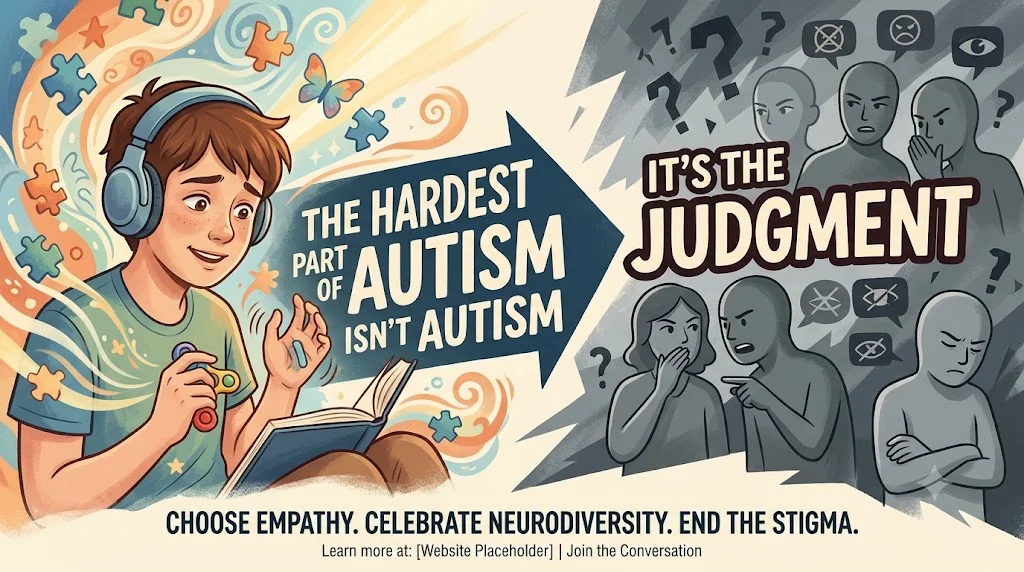
I never imagined that becoming an expert at ignoring stares would be part of raising my son. Not because I wanted to. Because I had no choice. When he was diagnosed with autism, I braced myself for hard therapy sessions, sleepless nights, and an uncertain future. I was ready for that. What I wasn’t ready for was this: the hardest part of autism isn’t autism. It’s other people’s judgment.
Quick Takeaways
- Strangers usually react to one minute of a child’s day — not the hundred hours of practice, therapy, and patience behind it
- What looks like a “tantrum” or “bad parenting” is often a meltdown: the body’s response to sensory overload, not a choice
- Meltdowns and tantrums look similar but come from different places, and they need different responses
- Reframing “misbehaving” as “having a hard time” changes how you respond to your own child, not just to onlookers
- A short, calm script for public moments protects your energy better than either over-explaining or staying silent
People See One Minute, Not the Whole Story
Autism doesn’t come with a manual. Every morning starts without knowing what the day will bring. Some days my son smiles for no reason and my heart feels full. Other days, a sound, a crowd, or a small break in routine turns a simple errand into a moment of survival.
What’s hard isn’t leaving the store early. What’s hard is hearing someone mutter, “Kids these days have no discipline,” or catching a look that says, that parent clearly isn’t trying.
They don’t know we’ve already tried a hundred different ways to prevent exactly this moment. They don’t know my son isn’t giving me a hard time. He’s having one. And they’ve walked into the one minute of our day when everything fell apart, without seeing the hours of preparation that came before it or the recovery that comes after.
Why Meltdowns Get Mistaken for Misbehavior
Most of the judgment autism families face comes down to one mix-up: people see a meltdown and read it as a tantrum.
A tantrum is usually goal-directed. A child wants something, doesn’t get it, and the behavior is aimed at changing an outcome — it typically eases once the child gets what they want or realizes the strategy isn’t working.
A meltdown works differently. It’s a nervous system that has taken in more sound, light, movement, or change than it can process, and it has to release that overload somehow. A child mid-meltdown isn’t negotiating. They usually can’t hear reasoning, can’t be bribed out of it, and don’t calm down faster because a stranger is watching. If anything, an audience makes it worse, because now there’s more stimulation to process, not less.
To a passerby, both can look like “a kid screaming in aisle six.” That’s the entire problem. The behavior looks the same from the outside, but what’s happening inside the child — and what actually helps — is completely different. This is one reason building sensory play ideas into everyday life at home matters: it gives a child low-stakes practice handling sensory input before they have to do it in a crowded store with an audience.
The Comments Nobody Says to Our Faces (and the Ones They Do)
They don’t see a child trying to process a world that feels too loud, too bright, too fast. They see a “misbehaving kid.”
They don’t see a parent quietly wondering if their child will ever say “I love you” unprompted. They see someone who “can’t control their kid.”
They don’t see the hundred repetitions it took to teach one skill at home. They see the one minute it fell apart at the grocery store.
Some of this is said in a whisper. Some of it is a look. Occasionally it’s said directly to your face by someone who thinks they’re helping. None of it comes from malice, most of the time — it comes from not knowing what they’re actually looking at.
What If We Judged Less and Wondered More?
Instead of asking, “Why can’t that parent control their child?” — what if the question was, “I wonder what that family is dealing with right now?”
One question closes a door. The other opens one. And the second question is the entire reframe autism parents wish strangers would make, because it takes maybe two seconds longer and changes everything about how the moment feels from the inside.
This isn’t about demanding sympathy. It’s about swapping a snap judgment for a small amount of curiosity — the same curiosity most people would want extended to them on their hardest day.
A Short Letter to People Watching Us
If you see a child struggling in public, a few things are worth remembering:
You’re witnessing one chapter of a much longer story — not the whole book. You don’t know how many milestones that child has already reached, how many quiet tears that parent has cried at home, or how much it cost just to leave the house that day.
So before the stare lingers, before the comment slips out, before the assumption forms — a little patience costs you nothing and can change a stranger’s entire day. Kindness is often remembered long after the words that provoked it are forgotten.
What Actually Helps in the Moment
Beyond hoping strangers extend grace, there are a few things that help autism parents hold their own ground in public without absorbing every look:
- A short, rehearsed line. Something like “He’s having a hard moment, we’re okay” said calmly to nobody in particular ends the guessing game for onlookers without turning into a public explanation of your child’s diagnosis.
- A card instead of a conversation. Many parents carry a small card explaining sensory overload or autism in a sentence, so they can hand it over instead of narrating in the middle of a meltdown.
- Permission to just leave. Walking away from a cart of groceries or an unfinished meal isn’t losing. It’s recognizing when the environment has become the problem, and removing your child from it is the actual solution.
- A recovery routine. Knowing what helps your specific child reset — quiet, pressure, headphones, a favorite object — matters more than what any bystander thinks in the moment.
None of this stops people from staring. It just means their reaction doesn’t get to decide how the rest of your day goes.
A Note for the Parent Who Came Home Feeling Embarrassed
If today was hard. If you came home replaying someone else’s look or comment. If you questioned your own parenting because of a stranger’s opinion — here’s what’s true anyway:
Your child doesn’t need a perfect parent standing next to them in public. They need the parent who shows up the next day too. The one who celebrates the tiny victories nobody else notices. The one who keeps trying new strategies after a bad outing instead of giving up on outings altogether. The one who loves without asking for anything back.
The world will keep judging what it doesn’t understand. But your child won’t remember the opinions of strangers in a parking lot. They’ll remember that you stayed, that you came back for them, and that you loved them exactly as they are.
When the Judgment Comes From Family, Not Strangers
Strangers are easier to write off. It’s harder when the comment comes from a grandparent, an aunt, or an old friend who says, “Have you tried being stricter?” or “He’ll grow out of it.” That kind of judgment carries more weight because it comes from people who are supposed to already understand.
The same reframe applies, just with more patience required. Most family members aren’t trying to hurt you — they’re working from an outdated idea of what “discipline” is supposed to fix. Sharing one concrete resource, like what actually happens during an autism diagnosis or the practical steps that follow one, often does more than a debate about parenting philosophy ever will.
Frequently Asked Questions
Why do autism parents often feel judged?
Autism is often called an invisible disability — people see a child’s behavior without seeing the sensory overload, communication differences, or emotional load behind it. That gap between what’s visible and what’s actually happening is where most unfair judgment comes from.
What should you do if you see an autistic child having a meltdown in public?
Give the family space and skip the stare, the comment, and the unsolicited advice. A neutral expression, or simply carrying on with your day, does more good than anything well-intentioned you might say in the moment.
Is a meltdown the same as a tantrum?
No. A tantrum is usually goal-directed and eases once a child gets what they want or gives up on getting it. A meltdown happens when a child becomes overwhelmed by sensory input, emotion, or a break in routine, and it needs support and a lower-stimulation environment — not consequences.
How can I support an autism parent I know?
Listen without offering a fix. Be patient with canceled plans or early exits. Learn a little about autism so you’re not relying on outdated assumptions. And keep including their family in plans, even after a hard outing.
What do autism parents want people to understand most?
Not pity — acceptance. Most autism parents aren’t looking for special treatment, just a little less assumption and a little more room for their child to be different without being treated as less.
Why does autism acceptance matter?
When people choose curiosity over judgment, autistic kids grow up in communities that make room for them instead of communities they have to constantly explain themselves to — and their parents stop having to brace for judgment every time they leave the house.
Conclusion
The next time you see a child struggling in public, remember: you’re seeing one chapter, not the whole story. Behind that child is a parent who has loved fiercely, fought quietly through therapy schedules and IEP meetings, and kept showing up despite the stares.
Before the judgment forms, choose curiosity instead. Because the hardest part of autism was never autism itself — it’s teaching the world that different doesn’t mean less. If you’re earlier in this journey and still sorting through what a diagnosis means for your family, why autism parents feel isolated is a good next read for the loneliness that so often follows the judgment.
Sources:
- Centers for Disease Control and Prevention (CDC) — Autism and Developmental Disabilities Monitoring (ADDM) Network
- American Academy of Pediatrics (AAP) — Autism Spectrum Disorder family support guidance
- Autism Speaks — Meltdowns vs. tantrums guidance for families
Comments