Before You Judge My Messy House, Spend One Day Raising My Autistic Child
From one autism mom to another: if you’re reading this, I want you to know something before we begin. I see you. I know the guilt you carry. I know how exhausting it is to love someone with your whole heart while feeling like you’re never doing enough. And if you’ve ever apologized because your house wasn’t clean before someone came over, this is for you.
Quick Takeaways
- Most of what looks like “mess” in an autism home is actually therapy and sensory equipment in active use, not clutter someone forgot to put away
- Every hour spent on the floor with a child is an hour not spent cleaning — and that trade-off repeats itself daily, not occasionally
- Judgment from visitors usually comes from not knowing what they’re looking at, not from malice
- Raising an autistic child means choosing, again and again, between a spotless house and one more chance to connect
- The guilt autism moms carry about “falling behind” at home is common, valid, and worth naming out loud
When You Walk Into My House, You See a Mess. I See My Child.
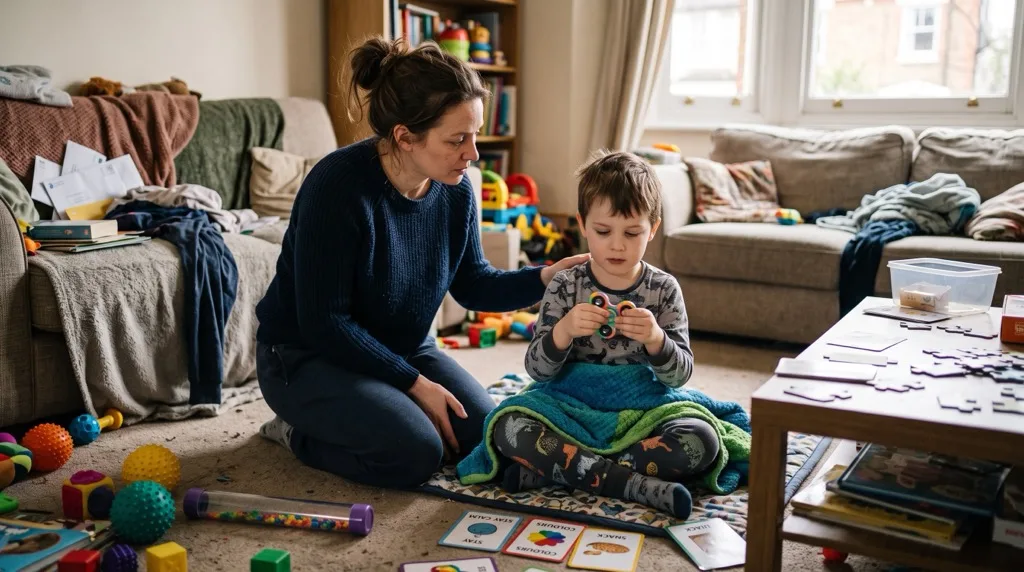
Sometimes people walk into my home and their eyes immediately go to the toys on the floor. The dishes waiting in the sink. The laundry that has been sitting in the basket for two days. The books scattered across the couch. The sensory toys in every corner.
I can almost feel the judgment before anyone even says a word. Doesn’t she ever clean? Why is her house always like this?
I wish they could see what I see. Because I don’t see a messy house. I see the floor where I sat with my little boy for an hour, trying to help him imitate one simple action. I see the flashcards we practiced together. I see the bubbles that made him look into my eyes for just a few precious seconds. I see the picture book that helped him understand one new word.
Every toy on my floor has a story. Every little mess reminds me that my son was learning today.
My Day Doesn’t Begin With Cleaning
Every morning, I tell myself that today I’ll finally catch up. I’ll fold the laundry. I’ll organize the toys. I’ll clean the kitchen.
Then my son wakes up, and everything else fades into the background. Will he eat breakfast today? Will he try a new food? Will today be a calm day, or full of sensory struggles? Can I encourage one more sound? Can I help him understand one more word? Can I make him smile?
By the time the day ends, I realize I spent every bit of my energy helping my child. The laundry is still waiting. But so is tomorrow.
The Toys Aren’t Everywhere by Accident
Sometimes people laugh and say, “Your house looks like a toy store.” I smile. But inside, I wish they understood.
Those aren’t just toys. That spinning toy helps calm my son’s busy mind. Those picture cards help him communicate when words won’t come. That puzzle teaches him to think. That chewy helps him feel regulated. That sensory bin helps him stay calm. Those bubbles encourage eye contact.
These aren’t things I forgot to put away. These are the tools I use to help my son understand a world that often feels too loud, too confusing, and too overwhelming for him. It’s the same reason sensory play ideas by age tend to take over a living room instead of staying tucked in a bin — the toys have to be within reach, all day, every day, for them to actually work.
What People Don’t See
People see the toys. They don’t see me sitting on the floor repeating the same word a hundred times. They don’t see me cheering because my son finally pointed to something he wanted. They don’t see me crying quietly after everyone has gone to bed because another day passed without hearing “Mom.”
They don’t see the therapy appointments. The endless research. The paperwork. The meetings. The sleepless nights. The worry that never leaves my heart.
They see one room. I live every moment. This is part of what makes the judgment around autism parenting so exhausting — people react to a single snapshot without any of the context behind it.
Sometimes the Judgment Hurts More Than the Mess
I know my house isn’t perfect. Believe me, I already know. I see it every single day.
But before you tell me my house is messy, ask yourself something. Would you rather I spend that hour vacuuming, or helping my son learn a new skill? Would you rather my shelves be spotless, or my child have one more opportunity to communicate?
Because every day, I have to choose. And every single time, I choose my son. I will always choose my son.
The Guilt We Carry as Autism Moms
Can I tell you something honestly? Sometimes I feel guilty. I feel guilty when someone comes over unexpectedly. I feel guilty when I see other moms with beautiful, organized homes. I feel guilty when I compare myself.
Then I remind myself of something. I’m not raising a perfect house. I’m raising a child who needs me. A child who depends on me to help him understand the world. A child who works twice as hard to learn things other children learn naturally.
That changes everything. It’s a version of the same weight so many parents describe after what to do after an autism diagnosis — the guilt doesn’t disappear once you have a plan, it just changes shape.
To Every Autism Mom Reading This
Mama, if your laundry has been sitting there for days, you’re not failing. If there are therapy toys all over your living room, you’re not failing. If dinner wasn’t homemade because today was simply too hard, you’re not failing.
If your child learned one tiny new skill today, you accomplished something beautiful.
The world may never celebrate those little victories. But another autism mom will. Because we know how much love, patience, and strength it takes to reach them.
Before You Judge My House, Look at My Heart
My home may never look like the homes you see on social media. There may always be toys on the floor. Picture cards on the table. Sensory tools in every room. Laundry waiting to be folded.
But if you look closely, you’ll also find a mother who loves with every piece of her heart. A mother who keeps trying after difficult days. A mother who celebrates milestones that many people never have to think about. A mother who would give absolutely everything to help her child thrive.
So before you judge my messy house, spend just one day raising my autistic child. Then you’ll understand why the dust on my shelves has never mattered as much as the smile on my son’s face.
Frequently Asked Questions
Is it normal for autism moms to struggle to keep the house clean?
Yes. Many autism moms spend most of their day helping their child with communication, meals, sensory needs, therapies, learning, and safety. Household chores often have to wait, and that’s completely understandable.
Why do autism homes often have toys everywhere?
Many of those “toys” are actually learning and sensory tools. They help children practice communication, emotional regulation, fine motor skills, and everyday life skills, which is why they tend to stay out in the open rather than packed away.
How can family and friends support an autism mom?
The greatest gift is understanding. Instead of judging the condition of her home, offer kindness, encouragement, or practical help. Even listening without criticism can make a huge difference.
Should I feel guilty if my house isn’t perfect?
No. A spotless home does not define your love or your success as a mother. Your child will remember the time, patience, and love you gave them, not whether every room was perfectly clean.
Conclusion
If you’re another autism mom reading this, I hope you know you’re not alone. I know there are days when you look around your house and wonder if you’re falling behind.
But then your child smiles at you. Makes a new sound. Learns one tiny skill. Or simply feels safe in your arms. And suddenly, none of the dishes, laundry, or toys on the floor seem as important.
Our homes may not always be perfect. But our love shows up every single day. And if I have to choose between a perfectly clean house and one more chance to help my son grow, I will choose my son. Every single time. If you’re earlier in this journey, things being an autism parent has taught me is a good next read for what changes once you stop measuring your days by a tidy house.
Sources:
- Centers for Disease Control and Prevention (CDC) — Autism and Developmental Disabilities Monitoring (ADDM) Network
- American Academy of Pediatrics (AAP) — Autism Spectrum Disorder family support guidance
- Autism Speaks — Sensory processing and family life resources
Comments