The Emotional Reality of an IEP Meeting: What Every Autism Parent Feels But Rarely Says
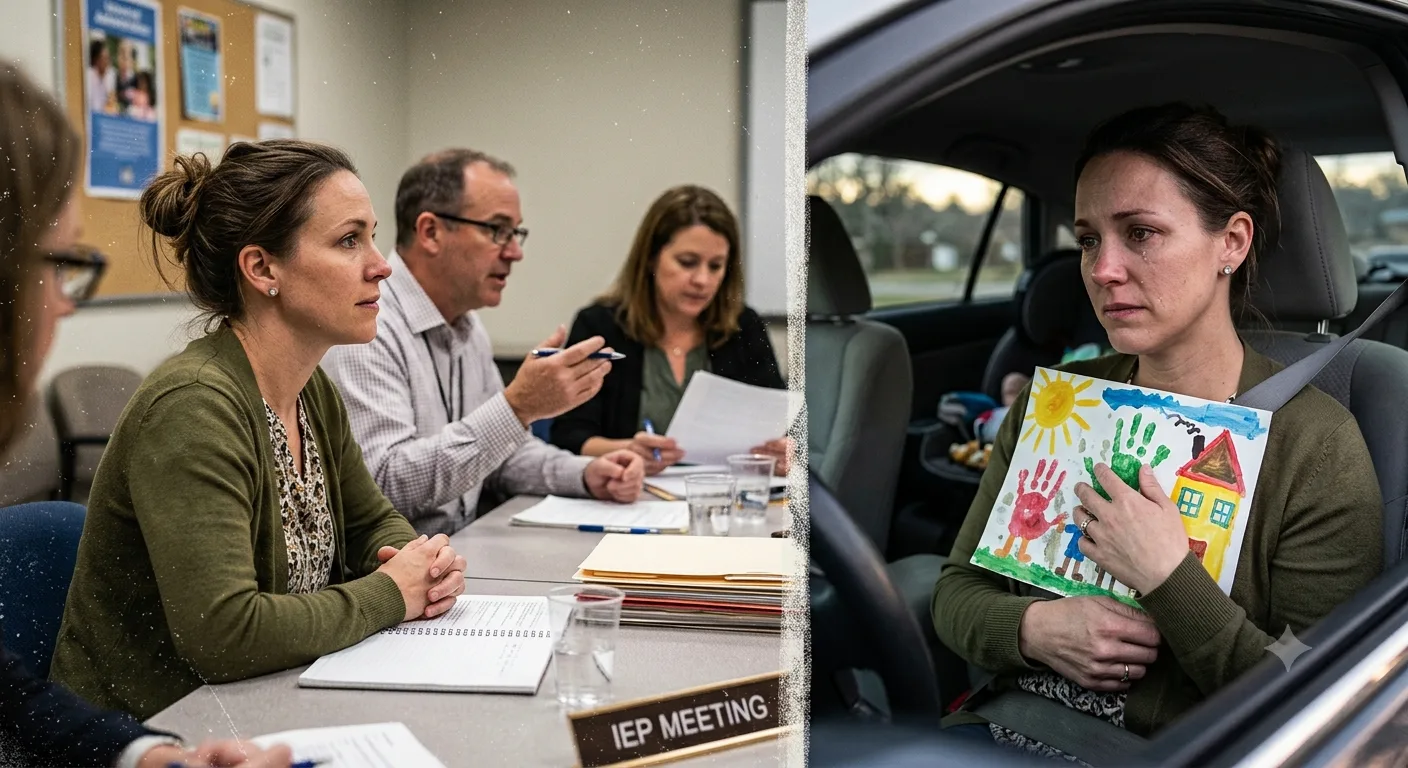
When people hear the words “IEP meeting,” they often think of paperwork, educational goals, and school planning. As an autism parent, I hear something completely different. I hear sleepless nights. I hear worry. I hear hope. I hear fear.
Quick Takeaways
- An IEP meeting may last an hour, but the emotions often start days before and linger long after
- Hearing your child’s challenges listed out loud can hurt even when the information is necessary and well-intentioned
- Every signature on an IEP can feel like a life-changing decision, and second-guessing yourself afterward is normal
- Meetings that open with a child’s strengths, not just their struggles, build real partnership between families and schools
- You are an equal member of the IEP team, not just a guest in the room
An IEP (Individualized Education Program) meeting may only last an hour or two, but for many parents of autistic children, the emotions begin days before the meeting and continue long after everyone has left the room. People see us sitting quietly around a conference table. What they don’t see is everything we carry in our hearts.
If you’re an autism parent, you probably know exactly what I mean. If you’re a teacher, therapist, grandparent, friend, or someone who has never attended an IEP meeting, I hope this article helps you understand the emotional journey behind those closed classroom doors.
What Is an IEP Meeting?
An IEP meeting is a meeting between parents, teachers, therapists, school staff, and other professionals who work together to create an educational plan for a child with disabilities. For an autistic child, these meetings may cover:
- Communication skills
- Speech therapy
- Occupational therapy
- Behavioral supports
- Social development
- Classroom accommodations
- Academic goals
- Progress since the previous meeting
On paper, it sounds simple. In reality, it can be one of the most emotional days of the year for a family.
Why IEP Meetings Feel Different for Autism Parents
Before the meeting even begins, many parents have already spent days worrying. Will they understand my child? Will they see the amazing little person I see every day? Will they only talk about what my child can’t do? Am I asking for too much? Am I asking for too little?
Every parent wants the best for their child. When your child is autistic, those decisions can feel even heavier because you know each choice may affect their education, confidence, and future. This is often the same weight parents feel right after diagnosis — what I wish I knew after an autism diagnosis covers that earlier version of the fear, before you’ve learned to sit at tables like this one.
The Invisible Emotions No One Sees
People often think autism parents are strong. The truth is, we become strong because we have no other choice.
During an IEP meeting, we smile. We nod. We take notes. We ask questions. We thank everyone for their time. What many people don’t see is that inside, our hearts may be racing. Sometimes every sentence feels heavy — every chart, every evaluation, every percentage, every comparison. Each one reminds us that our child is being measured in ways most children never are.
No parent enjoys hearing a list of things their child struggles with, even when that information is important for getting the right support.
Hearing Your Child’s Challenges Out Loud
One of the hardest moments in an IEP meeting is hearing professionals explain where your child needs help. The information matters. The educators and therapists are trying to help. But as parents, it can still hurt.
Because while others are discussing goals and data, we’re thinking about the child who laughs when we sing their favorite song, who lights up over bubbles, trains, numbers, or spinning toys, who gives us a smile that makes every difficult day worthwhile. Our child is so much more than a checklist. We wish everyone in the room could see that too.
The Weight of Making Life-Changing Decisions
Every signature on an IEP feels important. Should we agree? Should we ask more questions? Should we request another service? Should we wait? Should we push harder?
There isn’t a handbook that tells parents exactly what to do. Many of us leave wondering whether we made the best decision. That uncertainty can stay with us long after the meeting ends.
The Silent Drive Home
For me, the hardest part isn’t always the meeting. It’s what comes afterward — the drive home, the quiet, the replaying of every conversation. Should I have said more? Did I forget something important? Will these goals really help my child?
Sometimes I cry. Sometimes I sit in silence. Sometimes I remind myself that tomorrow is another chance to help my child grow. The meeting ends. Parenting doesn’t.
What We Wish Others Understood
We don’t expect perfection. We don’t expect miracles. We simply hope that the people working with our child see what we see: a child who deserves patience, a child who deserves understanding, a child who deserves opportunities, a child whose value isn’t measured by test scores or milestones.
Behind every autism parent at an IEP meeting is someone who has spent countless nights researching therapies, attending appointments, celebrating tiny victories, worrying about the future, and loving their child with every part of their heart.
To Teachers and School Staff
Your words matter. The way you speak about a child matters. Starting a meeting by sharing a child’s strengths before discussing challenges can make a meaningful difference.
When parents feel respected and heard, they are better able to work together with the school to support their child. Partnership grows when families know that everyone at the table is working toward the same goal: helping the child succeed.
To Every Autism Parent Reading This
If you’ve ever left an IEP meeting feeling emotionally exhausted, questioned whether you’re doing enough, cried in the car, or worried about your child’s future, please know this: you are not alone.
Your love for your child is evident in every question you ask, every meeting you attend, and every effort you make to understand their needs. Progress may come one small step at a time, and those steps still matter. Your child is not defined by a report. They are defined by their unique personality, their joy, their resilience, and the people who love them.
One day, when you look back, you may realize that every difficult meeting, every difficult conversation, and every tear was part of a journey that showed just how deeply you cared. Keep believing in your child. Keep speaking up. Keep celebrating every victory, no matter how small it may seem to others — your child is worth every bit of that love. If the fear behind these meetings ever feels like more than the room can hold, why autism parents feel isolated and the fear every autism parent carries about the future both speak to that same weight, and you’ll find you’re far from the only one carrying it.
Frequently Asked Questions
Why are IEP meetings emotional for autism parents?
IEP meetings often involve discussing a child’s challenges, progress, and educational needs. While these conversations help create the right support plan, they can also bring up feelings of worry, hope, pride, and uncertainty for parents.
How can parents prepare emotionally for an IEP meeting?
Review your child’s progress, write down your questions, bring notes, and remember that you are an important member of the IEP team. It’s okay to ask for clarification or time to think before making decisions.
What should teachers remember during an IEP meeting?
Parents know their child best. Listening carefully, acknowledging a child’s strengths, and speaking with empathy can help build trust and create a more positive meeting for everyone.
Is it normal to feel overwhelmed after an IEP meeting?
Yes. Many parents feel emotionally drained after discussing their child’s needs and future. Taking time to process those emotions and reaching out to supportive friends, family members, or parent groups can help.
Final Thoughts
An IEP meeting isn’t just another appointment on the calendar. For many autism parents, it’s a reminder of the challenges their child faces, the hopes they carry, and the future they are working toward one day at a time.
The paperwork eventually gets filed away. The meeting room empties. Life goes on. But the love a parent has for their autistic child never leaves that table. It goes home. It wakes up early for therapy. It celebrates tiny victories. It comforts through difficult days. It keeps believing, even when the path ahead feels uncertain.
And perhaps that is the most important thing to remember. Behind every IEP meeting is not just a plan. There is a family. There is a child. There is hope. And there is a love that cannot be measured on any form.
Sources:
- U.S. Department of Education — Individuals with Disabilities Education Act (IDEA), Part B
- American Academy of Pediatrics (AAP) — Supporting Children with Special Educational Needs
- Wrightslaw — Special Education Law and Advocacy resources
- Autism Speaks — School and IEP resources for families
Comments