I'm an Autism Mom, and I've Learned That Therapy Isn't Always in a Therapy Room
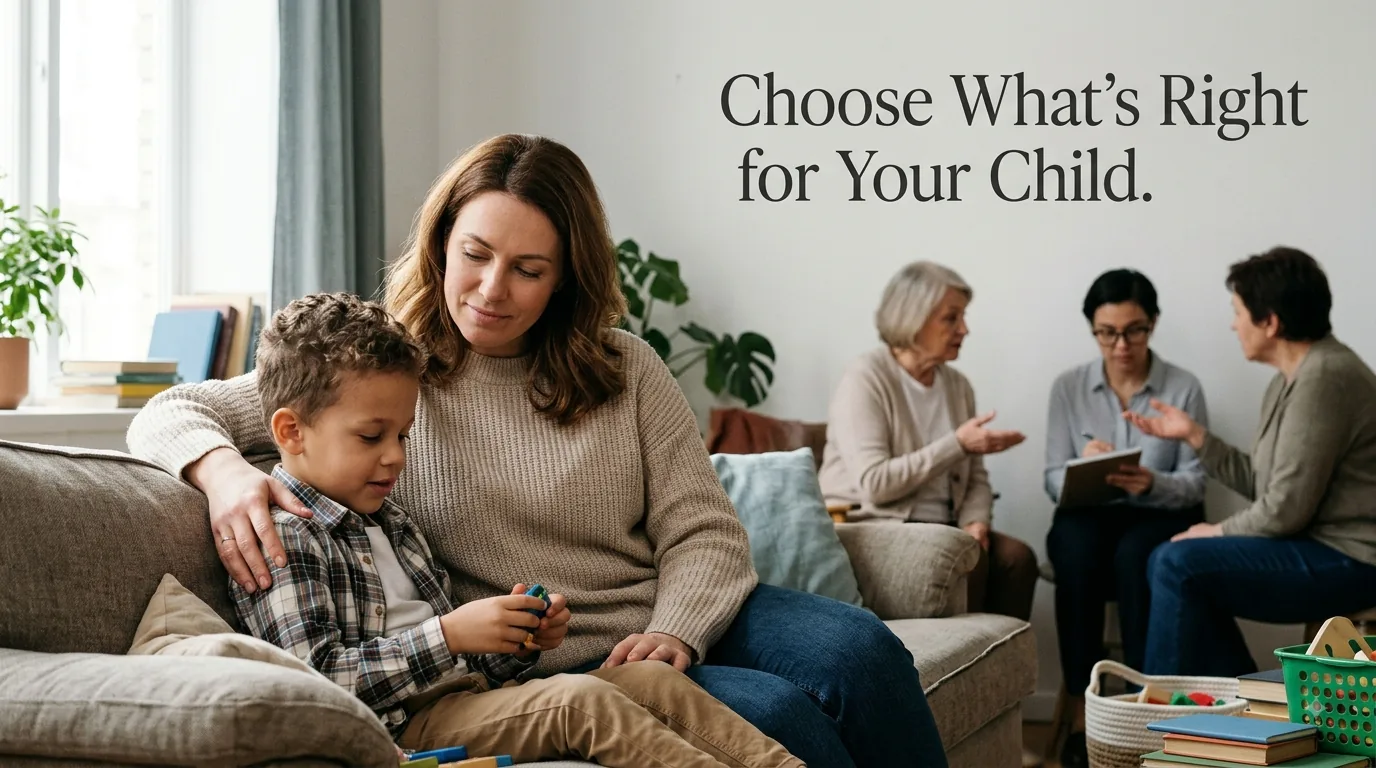
For a long time, therapy meant one thing in our house: a schedule.
Speech therapy on Mondays. Occupational therapy on Wednesdays. ABA filling up most of what was left. I used to measure my son’s progress by what happened inside those four walls — with the toys, the charts, the token boards, and the therapists who worked so hard with him. If the session went well, it was a good week. If the report said refused to engage, I carried that home in my chest like a stone.
I’m not writing this to tell you those therapies don’t matter. They do. My son has grown so much because of his speech therapist, his OT, his ABA team. If you’re a parent just starting this journey, please don’t skip them.
But somewhere along the way, I noticed something those sessions couldn’t quite give him. And I didn’t find it in a clinic, or a book, or a parent training module.
I found it, almost by accident, at the beach.
Quick Takeaways
- Structured therapies teach specific skills. Nature does something different — it helps a dysregulated nervous system settle, which is often the thing standing in the way of everything else
- Water gives steady, predictable sensory and proprioceptive input, which is why so many autistic kids seem like different children in a pool or at the shore
- Open outdoor spaces have less competing noise and light than clinics, classrooms, and even our own living rooms
- Zoos and aquariums offer low-demand engagement — nothing to perform, no one waiting for a response
- Unstructured play builds a kind of confidence a goal sheet can’t, because nobody is grading it
- Water safety is not optional: drowning is a leading cause of death among autistic children who wander, so supervision and swim skills come first
- This is an addition to therapy, not a replacement for it. Our kids need both
The Day I Noticed Something Different
It was an ordinary weekend. We weren’t “doing therapy.” We were at the beach because I needed air and he needed to move — that was the entire plan.
I watched him step into the water, and something in his whole body changed.
His shoulders dropped. His hands, which are almost always moving, moving, moving, went still for a second. And then he laughed. Not the scripted laugh he borrows from a show when he isn’t sure what a moment wants from him. A real one. Out of nowhere, at nothing, just because.
I sat down on the sand and I cried a little behind my sunglasses, the way you do when something good catches you off guard.
Because I thought: this is what regulated looks like on my son. This is what calm looks like on him. Not compliant. Not quiet because someone asked. Calm. And no clinic had ever gotten him there quite like this.
That wasn’t a one-time thing, either. The pool does it. The aquarium does it, with the slow-moving fish and the blue light on the floor. Even a walk through a quiet park does something a fluorescent-lit room full of noise and expectations sometimes can’t.
I had spent two years learning to read every flicker of distress on my child’s face. It turned out I had almost no practice reading peace.
Why Nature Works Like Therapy for Autistic Kids
I’m not a scientist. I’m a mom who pays very close attention. But here’s what I’ve come to understand about why these moments matter so much — and where what I’ve noticed lines up with what the professionals already know.
Water is naturally calming and regulating
The feeling of water on the skin. The resistance when he pushes his arms through it. The sound of waves, or just the hum of a pool filter. It gives his senses steady, predictable input — the same thing in the same way, over and over, with no surprises.
Occupational therapists have a name for something close to this idea: proprioceptive and deep-pressure input, the kind that helps an over- or under-stimulated nervous system find its center. It’s the reasoning behind weighted blankets, compression vests, and swinging. Water happens to deliver a lot of that naturally, all at once, without anyone having to plan it, prompt it, or reward it.
My son doesn’t know any of those words. He just knows his body feels better in there.
Open, natural spaces lower the noise
Therapy rooms, classrooms, even our own kitchens are full of competing sounds and lights — HVAC, fluorescent hum, a sibling, a timer, a door. A beach, a forest trail, a national park: these places are big, but they’re quiet in a way indoor spaces almost never are. The sounds are broad and repetitive instead of sharp and sudden.
For a child whose nervous system is already working overtime just to filter the world, that quiet is a kind of relief. It’s the difference between a room where everything is shouting at him and a place where nothing is.
Animals and slow movement hold attention gently
At the zoo or the aquarium, my son doesn’t have to perform. He doesn’t have to respond on command or make eye contact to prove he’s listening. He can just watch.
A turtle drifting past the glass. A giraffe chewing, unhurried, like it has all day. No pressure, no look at me, no timer counting down to the next trial. That kind of low-demand engagement lets him stay present without feeling watched or tested — and I’ve noticed he stays longer, and comes back to me more, when nothing is being asked of him.
Unstructured play builds real confidence
In therapy, goals are broken into small, specific steps, and that’s precisely what makes those programs work. But nature gives him something different: the freedom to explore at his own pace, make his own small decisions, and feel capable without anyone scoring it.
He picks the rock. He decides how deep to go. He chooses to climb the log or walk around it. And that look on his face — I did that myself — shows up every single time. I’ve never once seen it on a data sheet.
Sunlight, movement, and fresh air support the whole body
This part isn’t unique to autism, but it matters more for our kids, because dysregulation is so often physical before it ever becomes behavioral. Time outdoors supports better sleep, gives the body a chance to move in ways that feel good instead of ways it’s been asked to, and lowers the general hum of stress everyone in the family is carrying — parents very much included.
If bedtime in your house is its own battlefield, I wrote about that separately in when your autistic child won’t sleep and neither do you. A hard outdoor afternoon is one of the very few things that has ever moved that needle for us.
Where I’ve Seen It Work Best
Every child is different. Some autistic kids find sand unbearable, or hate the feeling of wet clothes, or panic at open space. If that’s your child, none of this is a prescription — it’s just a list of doors worth trying, and you already know which ones to skip.
Here’s what has genuinely helped my son, in case it helps yours too.
Swimming — the beach, a backyard pool, a community pool — has been the single biggest one for us. The sensory input from the water seems to reset him almost every time. When we get out, I have a different child for a few hours: softer, slower, easier to reach.
The park is our most-used one simply because it’s easy and it’s close. Even a short visit gives him room to run, swing, and just be without anyone asking anything of him. Swinging in particular is straight vestibular input — the same reason it shows up in so many OT gyms.
The aquarium is our go-to on hard days. Dim, quiet, slow-paced. It’s the one place I can take him when he’s already had too much thrown at him and I know it won’t make things worse.
The zoo works when he needs movement plus something to hold his interest without demanding anything back.
National parks and nature trails give him space to be loud, quiet, fast, or slow, without anyone needing him to be any particular way. That last part is worth more than I can explain to someone who hasn’t spent years apologizing for their child in public — and if you’ve been on the receiving end of those looks, the hardest part of autism isn’t the autism is the piece I wrote after a bad day in a grocery store.
If getting out of the house is genuinely impossible some weeks — and it is, in every autism household I know — sensory play ideas by age has the indoor versions. A bin of water on a towel is not the ocean, but it is not nothing.
Please Read This Part About Water Safety
I can’t write a whole article about how much water helps my son without saying the thing that keeps autism parents awake.
Water pulls our kids in. That’s the gift, and it’s also the danger. Autistic children wander from safe spaces at much higher rates than other children, and when they do, water is often exactly where they head. Drowning is one of the leading causes of death among autistic children who elope. The CDC and the AAP are both blunt about this, and I’d rather be blunt too than have this article read as carefree.
So, the non-negotiables, from a mom who is genuinely relaxed about a lot of things and not about this one:
- Swim lessons first, ideally with an instructor who has worked with autistic or sensory-sensitive kids. Many YMCAs and local autism organizations run adapted programs.
- Touch supervision near open water — close enough to reach out and grab, phone in your pocket, not in your hand.
- Locks, alarms, and fencing at home if there’s a pool or pond anywhere nearby, and a heads-up to neighbors about where your child is drawn.
- ID on their body — a bracelet, a shoe tag, a GPS tracker — especially if your child is nonverbal or can’t reliably give their name.
- Tell first responders in advance. Many local departments keep a voluntary registry of residents who may wander. It takes one phone call.
None of this is meant to scare you out of the water. It’s meant to keep the best thing in our week from becoming the worst day of our life.
This Doesn’t Replace Therapy — It Adds to It
I want to be really clear about this part, because I don’t want any parent to read this and think I’m telling them to skip speech, OT, or ABA.
Those therapies teach specific, structured skills that nature simply can’t. My son’s communication, his fine motor skills, his ability to navigate a world that wasn’t built with him in mind — so much of that came from his therapy team, and I’m endlessly grateful for them. If you’re at the very beginning and the acronyms are still swimming, what I wish I’d known before we started speech therapy is the version of that information I didn’t have.
What I am saying is that nature is a therapy too — just an unstructured, unpaid, unscheduled one. It doesn’t come with a treatment plan, a progress note, or a report card. Nobody bills for it and nobody measures it.
But I’ve watched it regulate my son, calm him, and make him genuinely happy in a way that is every bit as real as anything that happens in a session. And here’s the part I’ve come to believe: the calm nature gives him is often what makes the therapy work at all. A dysregulated child can’t learn. A settled one can. They’re not competing — one is holding the door open for the other.
There’s something else too, and it took me longer to admit. Those outings are the only hours of our week when I’m not anyone’s case manager. I’m not tracking data, not advocating, not translating my child to a professional. I’m just his mom, sitting on the sand, watching him be happy. That matters more than I understood at the time. If you’ve been running on empty long enough to forget what that feels like, what a 24-hour day actually looks like raising an autistic child will probably read like your own diary.
What I’d Tell Another Autism Mom
Start small. You don’t need a big trip or a perfect day. A short walk by water counts. Twenty minutes at the local park counts. The bar is on the floor and that’s allowed.
Watch your child, not the clock. Let them lead. If they want to stand in one spot and watch the waves for ten minutes, let that be the entire outing. That is the outing.
Go when it’s empty. Early mornings, weekdays, off-season, the last hour before closing. Half of what makes a place hard is the crowd, not the place.
Bring the exit plan. Snacks, ear defenders, a change of clothes, and full permission to leave after nine minutes with nothing to prove. An outing that ends early isn’t a failed outing.
Lower the goal to zero. No skills to practice, no words to elicit, nothing to work on. That’s not you slacking. The absence of demand is the active ingredient.
And don’t feel like you have to justify it to anyone. You don’t need a therapist’s note to know when your own child is at peace. You’ll see it in their shoulders, their hands, their laugh — just like I did.
Frequently Asked Questions
Is nature actually therapy for autistic children, or just a nice day out?
Both, honestly. It isn’t a clinical intervention and it shouldn’t be billed as one — it doesn’t teach targeted skills the way speech, OT, or ABA do. But the calming effect on a dysregulated nervous system is real, it’s consistent, and it’s the same principle occupational therapists are using when they prescribe sensory input, swinging, or deep pressure. Think of it as regulation support, not skill instruction.
Why does water calm my autistic child so much?
Water provides continuous, predictable sensory and proprioceptive input — gentle full-body pressure, steady resistance, and repetitive sound — without any of the sudden, unpredictable stimuli that make indoor environments hard. For a child whose nervous system struggles to filter input, that steadiness is regulating. It’s the same reason weighted blankets and compression clothing help many autistic kids.
Can outdoor time replace speech therapy, OT, or ABA?
No. Structured therapies build specific skills — communication, fine motor control, daily living, self-advocacy — through deliberate, incremental teaching that unstructured play doesn’t provide. Nature supports the regulation that makes those skills easier to access. Use both. If you have to choose because of cost or availability, keep the therapy and add whatever outdoor time you can for free.
My autistic child hates sand, water, or being outside. Am I doing something wrong?
Not at all. Sensory profiles vary enormously, and the same input that regulates one autistic child overwhelms another. Look for the version of “calm and low-demand” that works for your child — a quiet drive, a dim room, a car wash, a walk after dark, an empty gym. The principle is low sensory noise and no performance demands. The setting is negotiable.
How do I keep my child safe around water if they wander?
Start with adapted swim lessons — many YMCAs and autism organizations offer them, and water competence is the single best protection. Then layer on the rest: touch supervision near open water, fencing and alarms at home, ID on their body or a GPS tracker, and a call to your local police or fire department, many of which keep a voluntary registry for residents who wander. Drowning is a leading cause of death among autistic children who elope, so this genuinely comes before everything else in this article.
How long should an outing be?
As long as it’s still good, and not one minute longer. Ten regulated minutes beat an hour that ends in a meltdown in a parking lot, both for your child and for whether you’re willing to try again next week. Leaving while things are still going well is a strategy, not a retreat.
What if I can’t get outside at all this week?
Then don’t. Some weeks the schedule, the weather, or your own exhaustion make it impossible, and stacking guilt on top of that helps no one. A basin of warm water on a towel, a bath, a water table by the back door, or ten minutes on a swing at the end of the street covers a surprising amount of the same ground.
Final Thoughts
Therapy rooms gave my son skills. Nature gives him peace — whether that’s the ocean, the park, or just a quiet trail with nobody else on it.
As his mom, I’ve learned he needs both. And I hope more parents give themselves permission to count the second one as real therapy too, because it is. It just doesn’t come with an invoice.
If you’re reading this in a waiting room, on your phone, between one appointment and the next: take him to the water this weekend. Don’t work on anything. Don’t take data. Just sit down and watch his shoulders drop.
I promise you’ll recognize it when it happens.
Sources:
- Centers for Disease Control and Prevention (CDC) — Autism Spectrum Disorder: Signs, Screening, and Data; Drowning Prevention
- American Academy of Pediatrics (AAP) — Identification, Evaluation, and Management of Children With Autism Spectrum Disorder; Prevention of Drowning
- American Occupational Therapy Association (AOTA) — Occupational Therapy and Sensory Integration in Children
- National Autism Association — Autism & Wandering (elopement prevention resources)
- National Institute of Child Health and Human Development (NICHD) — Autism Spectrum Disorder: Treatments and Therapies
Comments