Beyond the Candles: What 'Birthday' Really Means to an Autistic Mom
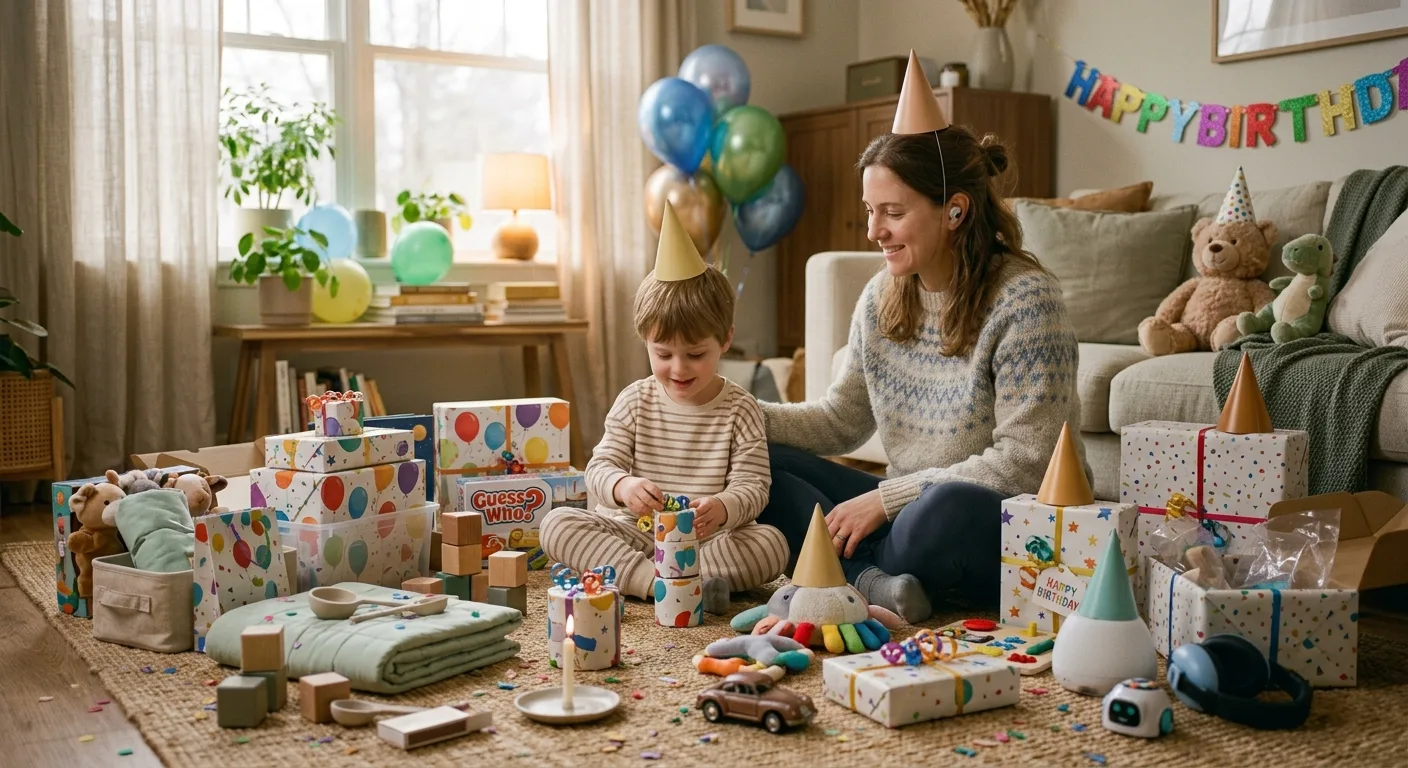
The word birthday carries a heavy, unspoken weight when you are an autistic mom.
To the rest of the world, it brings quick images of eager kids shouting “Woohoo, today is my birthday!”, begging for presents, blowing out candles, and counting down the days on a paper chain taped to the fridge. But in our home, the reality looks completely different.
When your child is non-speaking or deeply neurodivergent, they may not know what the word birthday means. They don’t wake up asking, “Where is my gift?” They don’t understand that this date on the calendar is supposed to be all about them. And as a mother navigating the world through my own autistic lens, carrying that reality in my heart is its own quiet, complicated journey.
This isn’t a post about how to throw a better party. It’s about what happens to a mother when the party stops being the point.
The Silent Heartbreak and the Deep Love
There is a specific ache that sits in your chest when society tells you how a birthday should look, versus how it actually unfolds in your living room.
I used to sit on the floor, surrounded by wrapped boxes, watching my child play with a piece of string — completely unaware that it was his special day. My heart would ache, and not because I thought he was suffering. He wasn’t. He was content. The ache was mine. I wanted so badly to bridge the gap between his world and the script I had been handed my whole life. I wanted to hear him yell “It’s my birthday!” just once.
As an autistic mom, I was already managing my own sensory load that day — the balloons squeaking against each other, the pitch of relatives’ voices, the pressure of being watched while I performed happy mother. But the heaviest part was never sensory. It was the emotional processing underneath it: How do I celebrate a child who doesn’t understand the concept of a celebration?
It took me years to notice that the question was built wrong. I was asking how to deliver a birthday to him, when what he needed was for the day to be delivered around him.
Over time, that heartbreak turned into something fiercer and more protective. Your child does not need to understand the social construct of a birthday in order to feel completely, unconditionally loved. Those are two entirely separate things, and I had spent years treating them as one.
Grief and Love Can Sit in the Same Room
I want to say this plainly, because I think a lot of autism parents are carrying it silently: it is possible to grieve the birthday you pictured while adoring the child in front of you. Those feelings are not in competition. Feeling one does not cancel or betray the other.
The grief isn’t about wishing your child were someone else. It’s usually about a picture you built before you met them — a picture assembled from other people’s family photos and birthday scenes in movies. Letting go of that picture is a real loss, and it deserves to be treated as one instead of shoved down as ingratitude.
What helped me most was giving that feeling a time and a place. I let myself feel it the night before, or in the shower the morning of, or in the car after everyone left. Then I came back and celebrated the child I actually have. Grief that gets acknowledged tends to move through. Grief that gets suppressed shows up as irritability at 4 p.m. on the day you wanted to be gentle.
If you are already living with the isolation that comes with autism parenting, birthdays can concentrate it. Everyone else’s celebration looks effortless in a two-second scroll. Yours took three weeks of planning and a recovery day afterward. That contrast is worth naming, not pushing past.
Redefining “Joy” When Words Aren’t There
When a child can’t ask for gifts or express excitement in a recognizable way, the work of translation falls to us. As an autistic parent, I’ve had to unlearn the neurotypical script and read the one my son actually writes:
- Drop the gift pressure. If tearing paper is confusing or frightening, don’t force it. A gift doesn’t need to be wrapped to bring light to someone’s eyes.
- Skip the social performance. There is no need to force a smile for a photo or prompt a “thank you” for relatives. His genuine comfort is the only reaction that counts as success.
- Learn his personal language. Excitement might not look like cheering. It might look like flapping hands, happy vocalizations, a request for deep pressure, or forty uninterrupted minutes with a favorite toy. That last one, in my house, is the loudest yes there is.
This is the same translation work that goes into realizing your child says “I love you” in ways that don’t use words. Once you can read it, the birthday stops looking empty. It was never empty. I was reading it in the wrong language.
Low-Stress, Sensory-Friendly Birthday Traditions
Throwing out the traditional expectations gave us room to build a day centered on peace, safety, and sensory comfort. Here’s how we do birthdays on our own terms.
1. The “Unwrapped” Discovery Table
Instead of stressful boxes that demand unwrapping, we set favorite items and new toys out in the open on a low table. Removing the unknown removes the anxiety, and he can explore at his own pace the moment something catches his attention. No paper, no bows, no audience waiting for a reaction shot.
2. Gentle Visual Timelines
Even when the concept of a birthday stays abstract, a predictable sequence brings comfort. A simple visual strip — Play → Favorite Snack → Quiet Time — keeps the day grounded instead of overwhelming. Visual supports are a standard, well-established tool in autism intervention precisely because they make transitions predictable, and a birthday is nothing but a day full of unusual transitions.
3. The Quiet “Happy Birthday” Moment
A room full of adults belting out a song at close range can be genuinely frightening to a sensory-sensitive nervous system. We swapped the loud chorus for soft humming, a warm hug, and sitting side by side with a calm activity. It still marks the moment. It just doesn’t ambush him to do it.
4. Zero Expectations About Cake
If cake texture causes distress, celebrate with safe, familiar food. Chips, nuggets, a bowl of the one fruit he trusts — love is not measured in frosting. This is the same principle behind understanding that safe foods are not picky eating: the goal of a birthday plate is comfort, not a photo of a child covered in buttercream.
5. Guilt-Free Quiet Breaks
Both of us get full permission to retreat. A dark, quiet room, headphones, a closed door — available at any point, without anyone having to earn it or explain it. As an autistic parent, I have to plan my own regulation into the day the same way I plan his, or I’m no use to him by the afternoon.
6. One Guest, Not Fifteen
We learned that the number of people in the house matters more than almost any other variable. One familiar person who already knows how he communicates costs him almost nothing. Twelve well-meaning relatives cost him three days. Smaller isn’t a downgrade — it’s the version he can actually be present for.
Preparing the People Who Love Him
The hardest part of birthdays was never my son. It was the audience.
Now I send a short message a few days ahead. Something like: He shows happiness differently than you might expect — he may not make eye contact, say thank you, or open anything while you’re here, and that’s not rejection. The best gift you can give him is a calm room and no pressure to perform.
Most people rise to it when they’re told what helps. The ones who don’t are usually the same ones who had opinions long before the birthday, and I’ve stopped budgeting energy for that on a day that belongs to my child. If you’ve ever felt the judgment that comes with parenting in public, you already know the difference between someone asking how to help and someone telling you what you’re doing wrong.
The Heart of It All: Love Beyond Words
A successful birthday was never actually measured by how many presents got opened or whether anybody shouted “Woohoo!”
As an autistic mom, I’ve learned that the magic of the day isn’t in teaching my child what a birthday means. It’s in holding space for exactly who he is. He may not know it’s his birthday. But he knows he is safe. He knows he is understood. He knows that on this day, like every other day, nobody in this house is going to ask him to be someone else for the comfort of the room.
In our quiet home, free from the world’s noise and expectations, that is the whole celebration.
And here’s the part nobody warned me about: the years when I stopped chasing the traditional version are the years the photos actually got good. Not posed, not prompted — just him, genuinely happy, on a floor covered in the things he loves.
A Message to Every Neurodivergent Parent
If you are carrying the quiet emotional weight of celebrating a milestone with a child who doesn’t understand it, give yourself grace. You don’t need balloons, big crowds, or traditional reactions to make a day meaningful. You are allowed to feel the loss of the version you imagined. You are allowed to skip the party entirely. You are allowed to celebrate on a Tuesday instead, when the house is calm.
When you strip away everyone else’s expectations, what’s left is pure, unfiltered love — and that has always been more than enough.
Frequently Asked Questions
How do I handle feelings of grief when my child doesn’t understand their birthday?
Allow yourself to feel those emotions without guilt. It is completely natural to mourn traditional milestone moments while still deeply loving and accepting your child — the two feelings coexist in most autism parents. Giving the grief a private time and place, rather than suppressing it, usually makes the day itself easier to be present for.
What should I tell family members who expect traditional birthday reactions?
Tell them ahead of time, not in the moment. Explain that your child expresses happiness differently, that a lack of eye contact or thank-yous isn’t rudeness or rejection, and that the most loving thing they can do is respect your child’s sensory needs and comfort level. Most people follow the lead you give them when you give it early.
How can I make the day special if my child doesn’t want toys or presents?
Focus on experiences that bring sensory joy rather than objects: a quiet park before the crowds arrive, water play, a favorite drive, extra uninterrupted time with a special interest, or simply a day with no demands. For many autistic children, the absence of pressure is the gift.
Are birthday parties bad for autistic children?
Not inherently — but conventional parties stack nearly every difficult variable at once: unfamiliar people, unpredictable noise, novel foods, disrupted routine, and social performance expectations. Many autistic children enjoy a scaled-down version far more than a large one. Start small, watch how your child responds, and adjust from there rather than assuming the standard format is the goal.
How do I celebrate without triggering sensory overload?
Reduce input across the board. Fewer guests, no sudden loud singing, familiar foods, unwrapped gifts, natural lighting instead of flashing decorations, and a guaranteed quiet space your child can retreat to at any moment. Keeping the day’s structure close to your normal routine also helps, since unpredictable transitions are often harder than the event itself.
Should I still sing “Happy Birthday” to my non-speaking child?
That’s entirely your call, and it depends on your child. Some children love it. Others find a room of adults singing at close range genuinely alarming. Humming softly, singing from across the room, or skipping it altogether are all legitimate options — the song is a tradition, not a requirement.
How do I manage my own sensory overload as an autistic parent on my child’s birthday?
Plan your regulation the way you plan your child’s. Build in breaks before you need them, keep the guest list to people you can be unmasked around, prepare food in advance so the day has fewer demands, and give yourself a recovery day afterward. A regulated parent is the single most useful thing you can bring to the day.
The Celebration Was Always the Love
There will always be a version of birthdays that belongs to other families — the countdown, the shrieking, the wall of torn wrapping paper. You are allowed to look at it, feel something about it, and then close the tab.
What happens in your living room is not a lesser version of that day. It’s a different one, built to fit a specific child by the person who knows him best. My son may never say the word birthday. But he knows the feeling of a day where nothing hurts, nobody demands, and everyone in the room is glad he’s here.
That was always what the candles were for anyway.
Sources:
- Centers for Disease Control and Prevention (CDC) — Autism Spectrum Disorder: Signs and Symptoms
- American Academy of Pediatrics (AAP) — Identification, Evaluation, and Management of Children With Autism Spectrum Disorder
- National Institute of Child Health and Human Development (NICHD) — Autism Spectrum Disorder: Treatments and Therapies
- Autism Speaks — Sensory Issues and Family Support Resources
Comments