
How to Improve a Child’s Speech at Home — Introduction
How to Improve a Child’s Speech at Home is one of the most common questions parents worry about when noticing delayed words, unclear pronunciation, or limited vocabulary. The good news is—speech development can improve greatly with consistent practice, play-based learning, and a supportive home environment. You don’t need to be a speech therapist to help your child communicate better. Small daily actions add up over time.
In this guide, you’ll learn science-backed methods, real practical home activities, and recommended learning toys from Amazon that make speech building fun and natural.
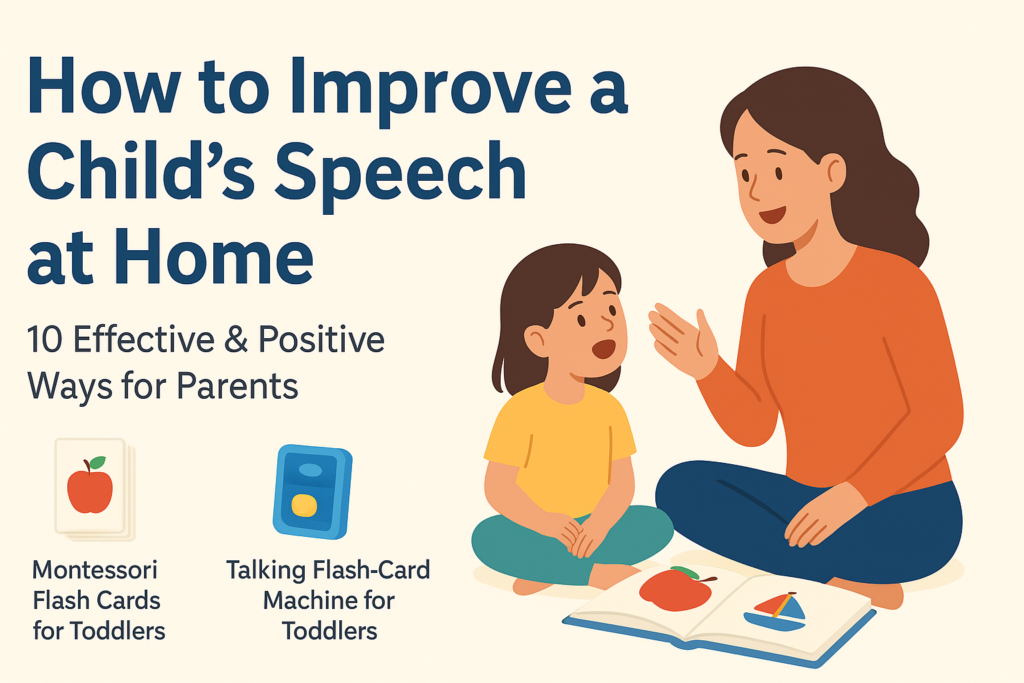
Table of Contents
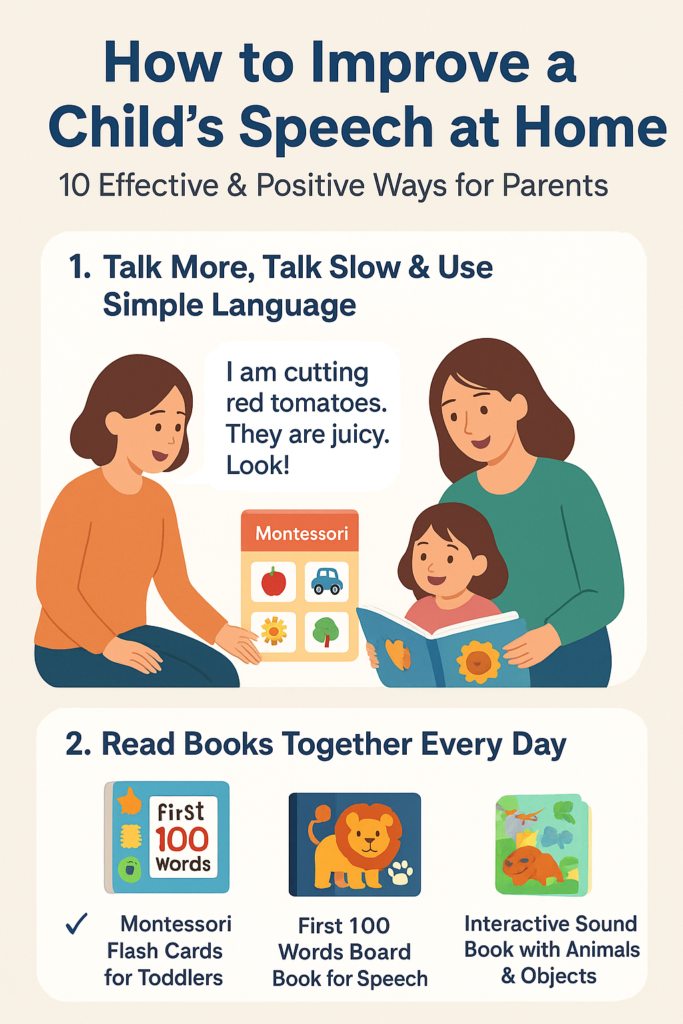
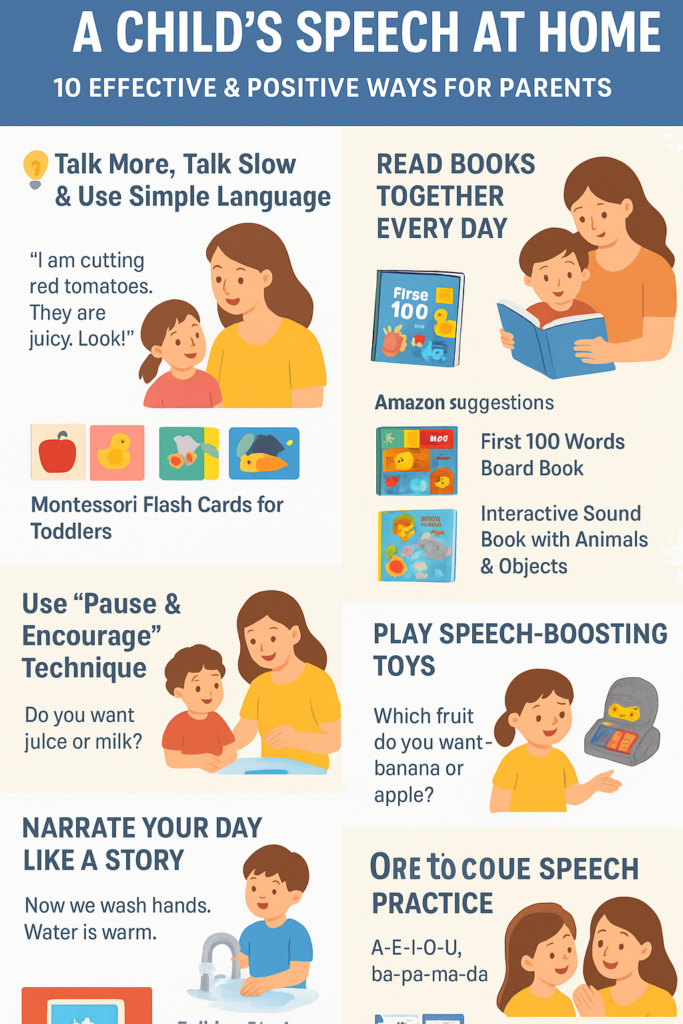
1. Talk More, Talk Slow & Use Simple Language
Children learn speech by listening. The more you talk to them during daily activities, the faster they pick up words.
💡 Example:
While cooking say, “I am cutting red tomatoes. They are juicy. Look!”
Try this from Amazon:
✔ Montessori Flash Cards for Toddlers — Great for naming objects naturally.
(Example Link: amazon.com/dp/flashcards-speech)
2. Read Books Together Every Day
Reading is the best natural method to boost vocabulary and sentence structure.
👉 Choose books with big pictures, short lines & repetition.
Amazon Suggestions:
📘 First 100 Words Board Book for Speech
📘 Interactive Sound Book with Animals & Objects
(Example links: amazon.com/dp/100words | amazon.com/dp/animal-sound-book)
3. Use “Pause & Encourage” Technique
Instead of finishing sentences for your child, pause and allow them to try speaking.
Example:
You: “Do you want juice or milk?”
Child pauses → even if they say “ju…”, praise and repeat clearly.
4. Play Speech-Boosting Toys
Kids learn best through play—not pressure. Speech-friendly toys help children repeat sounds, name objects, and form sentences naturally.
⭐ Best Amazon Toys for Speech Development:
🧩 Speech Therapy Toy Set with Picture Cards
🐒 Talking Flash-Card Machine for Toddlers
🎤 Kids Karaoke Microphone for Voice & Confidence
(Example links: amazon.com/dp/speech-toy | amazon.com/dp/talking-machine)
5. Narrate Your Day Like a Story
Children absorb words when they hear meaningful conversation.
Turn everyday tasks into speech practice:
🛁 “Now we wash hands. Water is warm.”
🚗 “The car goes fast. Look, red light means stop.”
6. Ask Open-Ended Questions
Avoid questions that only need yes/no answers.
Try questions that require speaking:
❓ “What did you like most at the park?”
❓ “Which fruit do you want—banana or apple?”
7. Reduce Screen Time & Increase Real Conversation
Speech grows through live interaction—not passive screens.
If screen time is used, choose interactive educational content only and sit with them while watching.
8. Practice Speech Through Singing & Rhymes
Songs improve rhythm, pronunciation & confidence.
Nursery rhymes are powerful for speech clarity.
🎤 “Twinkle Twinkle,” “ABC Song,” “Baby Shark,” etc.
Amazon Tool Idea:
🎶 Kids Bluetooth Karaoke Machine
9. Use Mirror Speech Practice
Stand with a mirror and repeat sounds like A-E-I-O-U, ba-pa-ma-da.
Kids love seeing themselves talk, making it engaging.
You can also use:
🪞 Speech Mirror Flash Card Kit for Toddlers (Amazon)
10. Be Patient, Celebrate Small Wins
Progress takes time. Every new attempt—even unclear—is progress.
Celebrate small achievements and avoid correcting harshly.
Instead of saying ❌ “No, that’s wrong”
Say ✔ “Great try! Let’s say it again together… ”
Signs You Should Consider a Speech Therapist
If the child:
- Says very few words by age 2
- Does not respond to name or instructions
- Shows frustration when speaking
- Speech unclear beyond age 4+
Early therapy can make a huge difference.
Frequently Asked Questions
1. What age should a child start talking?
Most kids say first words around 12 months and simple sentences by 2–3 years.
2. Can speech really improve at home?
Yes! With routine practice—reading, talking, toys & interaction.
3. Does screen time delay speech?
Excessive passive screen time may slow communication development.
4. How long does speech improvement take?
Every child is different—consistency matters more than speed.
Final Words
How to Improve a Child’s Speech at Home is all about creating a language-rich, playful environment. Talk more, read daily, use flashcards, communicate during routines, and celebrate every progress. Your encouragement is the biggest tool.