Separation Anxiety in Toddlers: Causes, Stages, and Coping Strategies That Work

Last Updated: February 2026

Separation anxiety in toddlers is one of the most challenging phases for parents to navigate. Your once-independent baby suddenly clings to your leg, cries at daycare drop-off, and melts down when you leave the room. The good news? This is completely normal, developmentally healthy, and temporary. Here’s everything you need to know to help your toddler through it.

Quick Takeaways

  • Separation anxiety typically peaks between 10-18 months and can resurge around 2 years
  • It’s a sign of healthy attachment, not a parenting failure
  • Short, confident goodbyes work better than long, emotional farewells
  • Most children outgrow intense separation anxiety by age 3-4

What Is Separation Anxiety?

Separation anxiety is distress a child experiences when separated from their primary caregiver. It’s a normal developmental milestone that shows your child:

  • Has formed a secure attachment to you
  • Understands object permanence (things exist when out of sight)
  • Hasn’t yet grasped that you’ll return

In toddlers, separation anxiety often manifests as:

  • Crying when you leave (or even when you move to another room)
  • Clinging to your leg or arms
  • Refusing to go to other caregivers
  • Nighttime distress and calling for parents
  • Following you everywhere, even to the bathroom
  • Increased tantrums around transitions

When Does Separation Anxiety Peak?

Separation anxiety follows a predictable pattern:

| Age | Stage |
|—–|——-|
| 6-8 months | First signs; stranger anxiety begins |
| 10-18 months | Primary peak; most intense separation distress |
| 18-24 months | May decrease or continue |
| 2 years | Second peak often occurs (linked to growing independence) |
| 3-4 years | Typically resolves; child understands you return |

Some children experience minimal separation anxiety; others have intense reactions. Both are normal.

Why Does Separation Anxiety Happen at Age 2?

The “second wave” of separation anxiety around age 2 has specific triggers:

Cognitive Development

Your toddler now:

  • Remembers past separations
  • Can anticipate future separations
  • Imagines scary scenarios when you’re gone

Growing Independence

The famous toddler independence drive creates a paradox:

  • They WANT to be independent
  • But they’re terrified of true separation
  • This creates push-pull behavior (running away then clinging)

Language Limitations

Two-year-olds feel big emotions but lack words to express them. This creates:

  • Frustration
  • Meltdowns
  • Physical clinginess

Major Life Changes

Separation anxiety often intensifies during:

  • New sibling arrival
  • Starting daycare or preschool
  • Moving to a new home
  • Parent returning to work
  • Changes in routine

Signs of Separation Anxiety in Toddlers

Typical Signs

  • Crying at daycare drop-off
  • Clinging to parent’s leg
  • Asking “Where’s Mommy/Daddy?” repeatedly
  • Distress when parent leaves the room
  • Difficulty with new babysitters
  • Wanting to sleep in parent’s bed
  • Following parent around the house

More Intense Signs (Still Normal)

  • Tantrums lasting 15+ minutes at separation
  • Physical symptoms (stomach aches before separations)
  • Resistance to sleeping alone
  • Regression in toilet training during separations
  • Nightmares about separation

Strategies to Help Your Toddler Cope

Before Separation

#### 1. Practice Brief Separations
Start small at home:

  • Leave the room for 30 seconds, then return
  • Gradually increase time
  • Always say goodbye and hello when you return
  • Build confidence that you come back

#### 2. Read Books About Separation
Age-appropriate books normalize the experience:

  • “The Kissing Hand” by Audrey Penn
  • “Llama Llama Misses Mama” by Anna Dewdney
  • “Owl Babies” by Martin Waddell
  • “Mommy Always Comes Back” by Carolyn Cory Scoppettone

#### 3. Create a Goodbye Ritual
A consistent ritual provides security:

  • Special handshake
  • Three kisses (forehead, each cheek)
  • A phrase: “See you after nap time!”
  • A wave from the window

#### 4. Introduce New Caregivers Gradually
Don’t throw your toddler into unfamiliar arms:

  • Have new caregivers visit while you’re present
  • Gradually increase time with the new person
  • Leave for short periods first
  • Build up to longer separations

During Separation

#### 5. Keep Goodbyes Short and Confident
The #1 rule: Don’t linger.

DO:

  • Say goodbye once, confidently
  • Use your ritual
  • Leave promptly after goodbye
  • Trust the caregiver to comfort

DON’T:

  • Sneak out (destroys trust)
  • Come back after saying goodbye (rewards crying)
  • Show anxiety (children read your emotions)
  • Negotiate or bargain
  • Drag out the goodbye

#### 6. Give a Transitional Object
A “lovey” bridges the gap:

  • Favorite stuffed animal
  • Blanket
  • Family photo for their cubby
  • Item with your scent (shirt you’ve worn)
  • Special bracelet or token

#### 7. Use Concrete Time References
Toddlers don’t understand clock time. Instead:

  • “I’ll pick you up after nap”
  • “After you eat snack, Mommy comes”
  • “Two sleeps, then I’m back”
  • Draw a simple schedule they can follow

After Separation

#### 8. Enthusiastic Reunion
Make coming back feel great:

  • Big smiles and hugs
  • “I missed you! I’m so happy to see you!”
  • Ask about their day (even if they can’t answer well)
  • Maintain consistency—same pickup ritual

#### 9. Stay Connected When Apart
For longer separations:

  • Leave voice memos they can listen to
  • Video call at consistent times
  • Send a special postcard
  • Create a photo book of you together

#### 10. Process Emotions at Home
After reuniting:

  • Validate their feelings: “You felt sad when I left”
  • Don’t dismiss: “There’s nothing to cry about”
  • Read separation books together
  • Use play to process (dolls saying goodbye)

What NOT to Do

Don’t Sneak Away

Even if it prevents initial crying, sneaking:

  • Destroys trust
  • Creates hypervigilance
  • Makes future separations worse
  • Teaches them they can’t trust your presence

Don’t Return After Goodbye

Coming back when they cry:

  • Rewards the crying behavior
  • Extends the painful goodbye
  • Teaches that crying brings you back
  • Creates a cycle

Don’t Show Your Own Anxiety

Children are emotional sponges:

  • Stay calm and confident
  • Save your tears for the car
  • Trust that they’ll be okay
  • Your confidence reassures them

Don’t Force Independence Too Fast

Respect their developmental stage:

  • Gradual exposure is more effective
  • Pushing too hard backfires
  • Validate their feelings while maintaining boundaries

Don’t Compare to Other Kids

“Look, Emma isn’t crying” doesn’t help:

  • Each child develops differently
  • Comparison shames them
  • Focus on your child’s progress

Special Situations

Daycare Drop-Off Tips

1. Arrive with time to spare (rushing increases stress)
2. Establish a quick routine (put bag in cubby, wave at window)
3. Connect with a caregiver (hand-off to familiar adult)
4. Use your goodbye ritual
5. Leave promptly after goodbye
6. Don’t hover at the window after leaving
7. Trust the process (most children calm within minutes)

Handling Bedtime Separation Anxiety

1. Consistent bedtime routine (creates predictability)
2. Transitional object in the crib/bed
3. Brief check-ins if needed (but don’t create a new habit)
4. Night light for children who fear darkness
5. Reassurance phrase: “I’m right in the living room”
6. Avoid bringing to your bed (unless that’s your family choice)

New Baby Sibling

Separation anxiety often spikes when a new sibling arrives:

  • Increase one-on-one time
  • Keep routines consistent
  • Involve them in baby care
  • Validate feelings of displacement
  • Reassure them of your love

Starting Preschool

Prepare in advance:

  • Visit the school before first day
  • Meet the teacher beforehand
  • Read books about starting school
  • Practice the morning routine
  • Start with shorter days if possible

When Separation Anxiety Might Be More Serious

While normal separation anxiety resolves by age 3-4, contact your pediatrician if:

  • Anxiety interferes with daily activities for 4+ weeks
  • Your child has panic attacks during separation
  • Physical symptoms are severe (vomiting, persistent stomach aches)
  • Separation anxiety suddenly appears after age 6
  • Your child cannot participate in normal activities
  • You notice other concerning developmental signs

These could indicate separation anxiety disorder, which benefits from professional support.

The Good News: This Phase Passes

Every parent in the throes of separation anxiety needs to hear this: It gets better. Your toddler is building trust through every goodbye and reunion. Each time you leave and return, you’re proving that separations are safe.

By age 3-4, most children:

  • Understand that parents return
  • Can tolerate longer separations
  • Have built confidence in other caregivers
  • Use language to express feelings

Your consistent, loving responses now are building lifelong security.

Frequently Asked Questions

How long does separation anxiety in toddlers last?

The peak phase typically lasts a few weeks to a few months. Most children show significant improvement by age 3. Episodes may resurge during stress or transitions.

Is severe separation anxiety a sign I’ve done something wrong?

Absolutely not. Intense separation anxiety often indicates strong attachment—a sign of good parenting, not bad. Every child’s temperament is different.

Should I avoid leaving my anxious toddler?

No. Avoiding separations can worsen anxiety. Instead, practice gradual, supported separations. Your child needs to learn (through experience) that you return.

Will my toddler be scarred from crying at drop-off?

No. Brief crying at separation is developmentally normal and doesn’t cause long-term harm. Most children calm within minutes and enjoy their day.

My 3-year-old suddenly has separation anxiety again. Is this normal?

Yes. Regression is common during stress, illness, or transitions (new sibling, starting preschool, moving). Return to your coping strategies—it usually passes quickly.

Sources:

  • American Academy of Pediatrics (AAP) – Separation Anxiety
  • Zero to Three – Separation: What’s Normal, What’s Not
  • Child Mind Institute – Separation Anxiety
  • CDC – Child Development Milestones

50 Screen-Free Activities for Toddlers That Actually Keep Them Busy

Last Updated: February 2026

Finding screen-free activities for toddlers that actually work can feel impossible—especially when you need 10 minutes to cook dinner or take a call. Good news: these 50 tested activities engage toddlers ages 1-3 without screens, using items you already have at home.

Quick Takeaways

  • Screen-free play builds creativity, motor skills, and attention span
  • Most activities require items already in your home
  • Match activities to your toddler’s current interests and development
  • Rotate activities weekly to maintain novelty

Why Screen-Free Play Matters

The American Academy of Pediatrics recommends limiting screens for children under 2 and ensuring limited, high-quality screen time for ages 2-5. Here’s why screen-free play benefits toddlers:

  • Develops imagination: Open-ended play builds creative thinking
  • Improves motor skills: Hands-on activities strengthen coordination
  • Builds attention span: Focused play teaches concentration
  • Encourages language: Interactive play promotes communication
  • Reduces behavioral issues: Less screen time correlates with fewer tantrums

Sensory Activities (Ages 1-3)

1. Water Play Station

Fill a plastic bin with water and add:

  • Cups, funnels, and spoons
  • Plastic toys for pouring
  • Sponges for squeezing

Tip: Put the bin in an empty bathtub or on a towel outside.

2. Rice or Pasta Sensory Bin

Fill a bin with uncooked rice or pasta. Add:

  • Measuring cups and spoons
  • Small figurines to hide and find
  • Funnels and containers

3. Play Dough Station

Homemade play dough recipe:

  • 1 cup flour, ½ cup salt, 2 tbsp cream of tartar
  • 1 cup water, 1 tbsp oil, food coloring
  • Cook on medium heat until it forms a ball

Add cookie cutters, rolling pins, and plastic utensils.

4. Cloud Dough

Mix 8 cups flour with 1 cup baby oil for moldable “cloud dough.” Add measuring cups and molds.

5. Jello Sensory Play

Make jello in a large pan, add small toys, and let toddlers dig them out. Fully washable mess!

6. Shaving Cream Art

Squirt shaving cream on a high chair tray or baking sheet. Add food coloring for swirling designs.

7. Frozen Toy Rescue

Freeze small toys in a container of water. Give your toddler warm water and spoons to “rescue” them.

8. Cooked Spaghetti Play

Cook spaghetti, cool it, and let toddlers explore the texture. Add food coloring for colored noodles.

9. Oatmeal Sensory Bin

Fill a bin with dry oatmeal. Add scoops, cups, and small toys.

10. Bubble Wrap Stomp

Tape bubble wrap to the floor for a stomping sensory experience.

Arts and Crafts (Ages 18 Months+)

11. Finger Painting

Use washable finger paints or make edible paint with yogurt + food coloring for younger toddlers.

12. Sticker Art

Give toddlers a sheet of stickers and paper. They’ll spend ages peeling and placing stickers.

13. Tape Resist Art

Make shapes with painter’s tape on paper. Let toddlers paint over it, then peel tape for designs.

14. Contact Paper Collage

Stick contact paper (sticky side up) to a window or table. Give toddlers tissue paper, leaves, or fabric scraps to stick.

15. Cotton Ball Painting

Clip cotton balls with clothespins for easy-grip paint dabbers.

16. Stamp Art

Use sponges, potato halves, or cookie cutters dipped in paint as stamps.

17. Coloring Books

Oversized crayons and simple coloring pages are perfect for 18+ months.

18. Dot Marker Art

Dot markers (Do-A-Dot style) require less coordination than crayons and create satisfying results.

19. Painting with Water

Give toddlers a cup of water and paintbrush to “paint” outside on concrete, fences, or cardboard.

20. Torn Paper Art

Let toddlers tear paper and glue pieces onto a larger sheet for collage art.

Active Play (Burns Energy!)

21. Indoor Obstacle Course

Use pillows, couch cushions, tunnels (blanket over chairs), and laundry baskets for climbing and crawling.

22. Dance Party

Turn on music and dance! Freeze dance (pause music to freeze) is toddler-approved.

23. Balloon Keep-Up

Blow up a balloon and try to keep it off the ground together.

24. Bubble Chasing

Blow bubbles indoors or outdoors for chasing and popping.

25. Animal Walks

Walk like a bear (hands and feet), hop like a frog, waddle like a penguin, slither like a snake.

26. Pillow Mountain

Pile couch cushions and pillows for climbing and jumping (supervised).

27. Indoor Bowling

Stack plastic cups or empty bottles. Roll a soft ball to knock them down.

28. Tunnel Play

Make tunnels from boxes or blankets over chairs for crawling through.

29. Ball Pit

Fill a small plastic pool or pack ‘n play with plastic balls.

30. Toddler Yoga

Follow simple yoga poses: tree, downward dog, happy baby. Great for calming down.

Pretend Play (Ages 18 Months+)

31. Kitchen Play

A play kitchen or real pots, pans, wooden spoons, and plastic food keeps toddlers busy for hours.

32. Baby Doll Care

Dolls with blankets, bottles, and diapers for nurturing play.

33. Car and Train Play

Toy cars, trains, and tracks. Make “roads” with painter’s tape on the floor.

34. Dress-Up Box

Old hats, scarves, purses, shoes, and costume pieces for imagination play.

35. Doctor Kit Play

Toy stethoscope, bandages, and medical kit for pretending to be a doctor.

36. Grocery Store

Set up a pretend store with play food, a shopping bag, and a cash register.

37. Cleaning Play

Give toddlers a small broom, dustpan, or spray bottle with water and a cloth. They love mimicking adults!

38. Phone Play

Old phones or toy phones for pretend conversations.

39. Restaurant Play

Take orders on paper, “cook” play food, serve it on plates.

40. Construction Site

Toy trucks, scoops, and a bin of sand or rice for construction pretend play.

Quiet Activities (Nap Time Prep)

41. Book Basket

Create a special basket of books. Rotate books weekly to maintain interest.

42. Puzzles

Start with 2-4 piece wooden puzzles, progressing to 12+ pieces.

43. Stacking Cups/Blocks

Simple stacking and knocking down—endlessly entertaining.

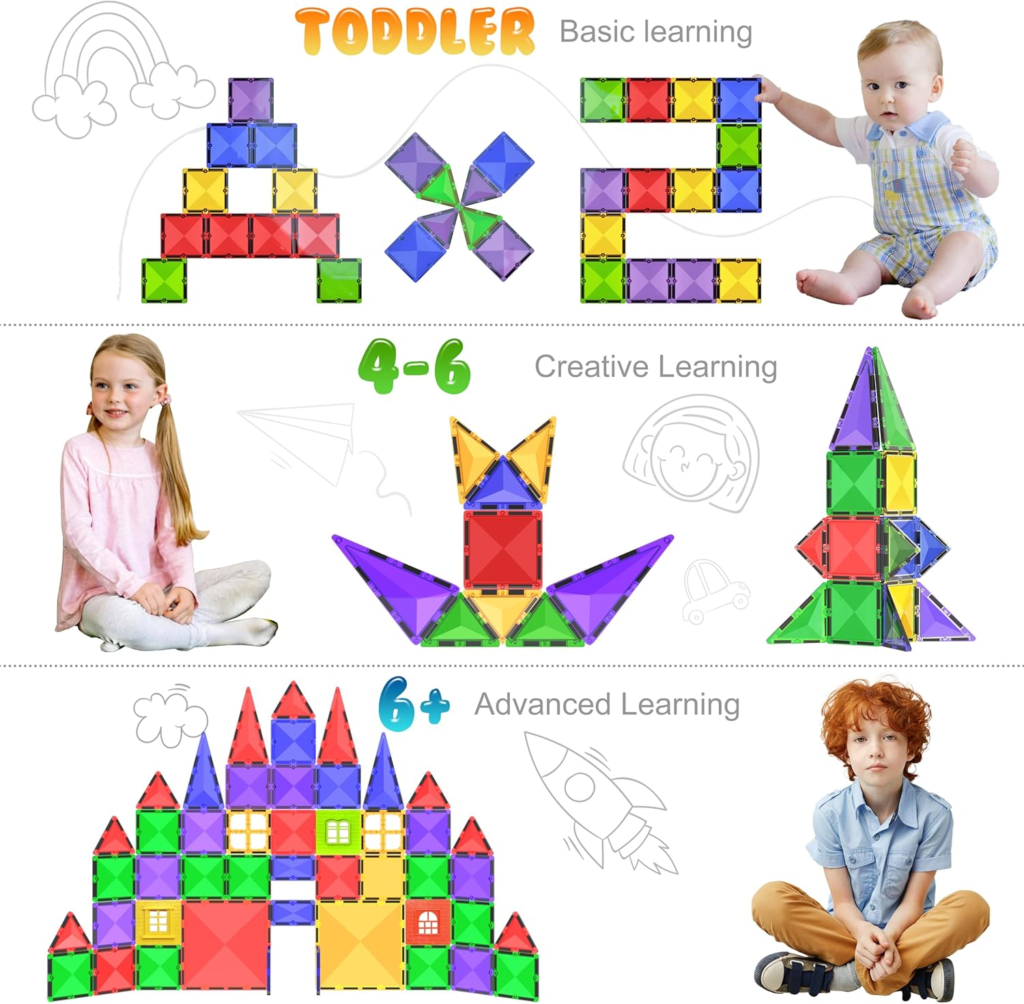
44. Magnetic Tiles

Magna-Tiles or similar magnetic building blocks are excellent for quiet building.

45. Threading Beads

Large wooden beads and thick lace for fine motor practice.

46. Shape Sorters

Classic shape sorting toys for quiet focus.

47. Sensory Bottles

Fill clear plastic bottles with water, glitter, beads, or small toys. Seal tightly with glue.

48. Peg Boards

Chunky pegs in a pegboard develop fine motor skills.

49. Look and Find Books

Simple search-and-find books keep toddlers engaged quietly.

50. Magna Doodle / Etch a Sketch

Mess-free drawing boards for doodling.

Activity Organization Tips

Create Activity Stations

Designate areas for different types of play:

  • Art corner with supplies
  • Reading nook with books
  • Sensory table for messy play

Rotate Toys

Put some toys away and rotate them every 1-2 weeks. “New” toys are more engaging.

Prepare Activities in Advance

Pre-make sensory bins and art supplies on weekends. Pull them out when needed.

Match Activity to Energy Level

  • High energy: Dance party, obstacle course
  • Medium energy: Sensory bins, pretend play
  • Low energy: Puzzles, books, quiet crafts

Set Up Independent Play

Once you’ve demonstrated an activity, step back and let them play independently. Start with 5 minutes and build up.

Age-Appropriate Activity Guide

| Age | Best Activities |
|—–|—————-|
| 12-18 months | Sensory bins, stacking, simple cause-and-effect toys |
| 18-24 months | Finger painting, play dough, simple puzzles, pretend play |
| 2-3 years | More complex crafts, threading, imaginative play, obstacle courses |

Safety Reminders

  • Supervise all activities with small parts
  • Check items for choking hazards (nothing smaller than a toilet paper tube)
  • Use washable, non-toxic art supplies
  • Taste-test sensory materials for younger toddlers (use edible options)
  • Secure furniture that could tip during climbing

Frequently Asked Questions

How do I get my screen-addicted toddler interested in these activities?

Start by doing activities together. Gradually step back as they engage independently. The transition takes time—expect some protest initially.

What if my toddler won’t play independently?

Start small: sit nearby while they play. Over time, increase distance. Build independence gradually, starting with just 2-3 minutes.

How many activities should I have available?

Less is more. 3-4 activities out at a time prevents overwhelm. Store the rest and rotate weekly.

These activities are messy! How do I manage?

Contain mess: use high chair trays, plastic bins, or play outdoors. Accept that toddler play is messy—clean-up is faster than you think.

Sources:

  • American Academy of Pediatrics (AAP) – Screen Time Guidelines
  • Zero to Three – Toddler Development
  • CDC – Child Development Milestones
Iron-Rich Foods for Toddlers: 25 Kid-Approved Options Parents Love

Last Updated: February 2026

Getting enough iron-rich foods for toddlers is crucial for brain development, energy, and immune function—but convincing picky eaters to eat them? That’s the real challenge. This guide covers 25 delicious, toddler-approved iron sources plus creative serving ideas that actually work.

Quick Takeaways

  • Toddlers (ages 1-3) need 7mg of iron daily
  • Iron deficiency is the most common nutritional deficiency in children
  • Pair iron-rich foods with vitamin C to boost absorption
  • Avoid giving milk or calcium-rich foods at the same time as iron sources

Why Iron Matters for Toddlers

Iron is essential for your toddler’s:

  • Brain development: Creates neurotransmitters for learning and memory
  • Energy levels: Carries oxygen throughout the body
  • Immune function: Fights off infections
  • Physical growth: Supports muscle development

Iron deficiency can cause:

  • Fatigue and irritability
  • Pale skin
  • Poor appetite
  • Developmental delays
  • Increased infections

The American Academy of Pediatrics reports that iron deficiency affects up to 15% of toddlers—making it the most common nutritional deficiency in developed countries.

How Much Iron Do Toddlers Need?

| Age | Daily Iron Requirement |
|—–|———————-|
| 7-12 months | 11 mg |
| 1-3 years | 7 mg |
| 4-8 years | 10 mg |

Sounds simple, but there’s a catch: toddlers absorb only 10-15% of the iron they eat. That’s why focusing on high-iron foods and absorption boosters is essential.

Types of Iron: Heme vs. Non-Heme

Heme Iron (Animal Sources)

  • Found in meat, poultry, fish
  • 15-35% absorption rate
  • Not affected by other foods

Non-Heme Iron (Plant Sources)

  • Found in beans, grains, vegetables
  • 2-20% absorption rate
  • Enhanced by vitamin C; inhibited by calcium and tannins

Both types count! A varied diet with both heme and non-heme sources works best.

25 Iron-Rich Foods Toddlers Will Actually Eat

Meat and Poultry (Heme Iron)

#### 1. Ground Beef
Iron content: 2.5 mg per 3 oz serving

Toddler-friendly ideas:

  • Mini meatballs with marinara
  • Taco meat with soft tortillas
  • Meat sauce over pasta
  • Hamburger patties cut into strips

#### 2. Chicken Thighs
Iron content: 1.3 mg per 3 oz serving

Dark meat has more iron than white meat! Try:

  • Shredded chicken for tacos
  • Chicken strips with dipping sauce
  • Chicken and veggie stir-fry
  • Slow cooker pulled chicken

#### 3. Turkey
Iron content: 1.4 mg per 3 oz (dark meat)

Serving ideas:

  • Turkey meatballs
  • Ground turkey in pasta sauce
  • Turkey and cheese roll-ups
  • Mini turkey burgers

#### 4. Beef Liver
Iron content: 5 mg per 3 oz serving

The iron powerhouse! Make it palatable:

  • Mix into meatloaf (1 part liver to 3 parts beef)
  • Blend into pasta sauce
  • Add to hamburger patties
  • Make liver pâtĂŠ on crackers

#### 5. Lamb
Iron content: 1.7 mg per 3 oz serving

Try:

  • Ground lamb kofta
  • Lamb in shepherd’s pie
  • Slow-cooked lamb with vegetables

Seafood (Heme Iron)

#### 6. Canned Tuna
Iron content: 1.4 mg per 3 oz serving

Low-mercury options for toddlers:

  • Tuna salad sandwiches
  • Tuna mixed with pasta
  • Tuna patties

*Note: Limit to 2-3 servings per week due to mercury*

#### 7. Salmon
Iron content: 0.5 mg per 3 oz serving

Also provides omega-3s:

  • Salmon patties
  • Flaked salmon over rice
  • Salmon mixed into mac and cheese

#### 8. Sardines
Iron content: 2.5 mg per 3 oz serving

An underrated toddler food:

  • Mashed on toast
  • Mixed into pasta
  • Added to homemade fish cakes

#### 9. Shrimp
Iron content: 2.6 mg per 3 oz serving

Toddler-approved servings:

  • Shrimp fried rice
  • Shrimp pasta
  • Grilled shrimp skewers (remove skewer for safety)

Beans and Legumes (Non-Heme Iron)

#### 10. Lentils
Iron content: 3.3 mg per ½ cup cooked

The plant-based iron champion:

  • Lentil soup
  • Red lentil pasta sauce
  • Lentils in curry
  • Mashed lentil dip

#### 11. Black Beans
Iron content: 1.8 mg per ½ cup cooked

Kid-friendly servings:

  • Black bean quesadillas
  • Black bean soup
  • Mashed black bean tacos
  • Black bean brownies (yes, really!)

#### 12. Chickpeas
Iron content: 2.4 mg per ½ cup cooked

Versatile options:

  • Hummus with veggies or pita
  • Roasted chickpea snacks
  • Chickpea pasta
  • Added to curries

#### 13. Kidney Beans
Iron content: 2 mg per ½ cup cooked

Serving ideas:

  • Mild chili
  • Bean and cheese burritos
  • Added to soups
  • Mashed as a dip

#### 14. Edamame
Iron content: 1.7 mg per ½ cup

A fun snack:

  • Steamed with light salt
  • Shelled in pasta
  • Blended into pesto
  • In fried rice

Grains and Cereals (Non-Heme Iron)

#### 15. Fortified Breakfast Cereals
Iron content: 4-18 mg per serving (check labels)

Choose low-sugar options:

  • Cheerios (4.5 mg per serving)
  • Cream of Wheat (9 mg per serving)
  • Total cereal (18 mg per serving)

#### 16. Oatmeal (Fortified)
Iron content: 4-6 mg per packet (fortified instant)

Make it tasty:

  • Add mashed banana and cinnamon
  • Stir in peanut butter
  • Top with berries (vitamin C boost!)
  • Make oatmeal pancakes

#### 17. Quinoa
Iron content: 2.8 mg per cup cooked

Toddler-approved ideas:

  • Quinoa mac and cheese
  • Mixed into meatballs
  • Quinoa porridge
  • Added to soups

Vegetables (Non-Heme Iron)

#### 18. Spinach
Iron content: 3.2 mg per ½ cup cooked

Hide it in:

  • Smoothies (with banana and berries)
  • Pasta sauce
  • Scrambled eggs
  • Muffins

#### 19. Broccoli
Iron content: 0.5 mg per ½ cup + vitamin C for absorption

Serving ideas:

  • Steamed with cheese sauce
  • Roasted with parmesan
  • In pasta
  • “Broccoli trees” with dip

#### 20. Peas
Iron content: 1.2 mg per ½ cup

Kid-friendly options:

  • Mashed pea dip
  • In fried rice
  • Mixed with pasta
  • In soup

#### 21. Potatoes
Iron content: 1.9 mg per medium potato (with skin)

Easy preparations:

  • Baked potato “boats”
  • Mashed potatoes
  • Roasted potato wedges
  • Potato soup

Fruits (Non-Heme Iron + Vitamin C)

#### 22. Dried Apricots
Iron content: 1.5 mg per Âź cup

As a snack or:

  • Chopped in oatmeal
  • In trail mix (for older toddlers)
  • Pureed as a sauce

#### 23. Prunes
Iron content: 0.9 mg per Âź cup

Bonus: helps with constipation!

  • Prune puree in muffins
  • As a snack
  • Blended into smoothies

#### 24. Raisins
Iron content: 0.8 mg per Âź cup

Toddler favorite:

  • Ants on a log (celery + PB + raisins)
  • In oatmeal
  • Trail mix for older toddlers
  • In baked goods

Other Sources

#### 25. Eggs
Iron content: 0.9 mg per egg

Versatile protein:

  • Scrambled
  • Hard-boiled (cut safely)
  • In French toast
  • Egg muffins

Iron Absorption Boosters and Blockers

Pair Iron With Vitamin C (Boosts Absorption 2-3x)

| Iron Food | Vitamin C Pairing |
|———–|——————|
| Oatmeal | Strawberries |
| Meatballs | Tomato sauce |
| Lentils | Bell peppers |
| Spinach | Orange juice |
| Beans | Salsa |

Avoid These With Iron Meals (Block Absorption)

  • Milk and dairy (calcium competes with iron)
  • Tea (tannins block absorption)
  • Coffee (not that toddlers drink it!)
  • High-fiber cereals (phytates reduce absorption)

Practical tip: Serve milk between meals, not with iron-rich foods.

Sample High-Iron Meal Plan

Breakfast

  • Fortified oatmeal with strawberries
  • Scrambled egg

Morning Snack

  • Hummus with bell pepper strips

Lunch

  • Turkey meatballs with marinara
  • Broccoli
  • Water (save milk for later)

Afternoon Snack

  • Cheerios
  • Orange slices

Dinner

  • Chicken thigh strips
  • Quinoa
  • Peas
  • Mandarin oranges

Signs Your Toddler May Need More Iron

Watch for:

  • Pale skin, especially inside lower eyelids
  • Fatigue or low energy
  • Poor appetite
  • Irritability
  • Frequent infections
  • Slow weight gain
  • Craving non-food items (pica)

If you notice these signs, talk to your pediatrician about testing iron levels.

When to Consider Iron Supplements

Supplements may be needed if your toddler:

  • Has diagnosed iron deficiency
  • Was premature or low birth weight
  • Drinks excessive milk (more than 24 oz daily)
  • Has restricted diet
  • Has absorption issues

Always consult your pediatrician before supplementing—too much iron can be harmful.

Frequently Asked Questions

How do I know if my toddler is getting enough iron?

Track their diet for a few days. If they eat a variety of the foods listed above, they’re likely getting enough. For certainty, ask your pediatrician for a blood test.

My toddler only wants milk. What should I do?

Limit milk to 16-24 oz daily. Excessive milk fills them up and interferes with iron absorption. Serve milk between meals, not with them.

Are iron gummies safe for toddlers?

Only use supplements recommended by your pediatrician. Iron overdose is dangerous—keep supplements out of children’s reach.

Can my vegetarian toddler get enough iron?

Yes! Focus on lentils, beans, fortified cereals, and iron-rich vegetables. Pair with vitamin C at every meal to maximize absorption.

Sources:

  • American Academy of Pediatrics (AAP) – Iron Needs
  • Centers for Disease Control and Prevention (CDC) – Iron Deficiency
  • National Institutes of Health (NIH) – Iron Fact Sheet
  • USDA FoodData Central – Nutrient Database

2-Year-Old Sleep Regression: Why It Happens and How to Survive It

Last Updated: February 2026

Just when you thought the sleepless nights were behind you, the 2-year-old sleep regression hits. Your toddler who once slept through the night is now fighting bedtime, waking up crying, or refusing naps entirely. This exhausting phase is completely normal—and temporary. Here’s everything you need to know to get through it.

Quick Takeaways

  • The 2-year sleep regression typically lasts 2-6 weeks
  • Causes include developmental leaps, increased independence, and separation anxiety
  • Consistency is your most powerful tool—maintain routines even during disruption
  • This phase will pass; most toddlers return to normal sleep patterns

What Is the 2-Year Sleep Regression?

A sleep regression is a period when a child who previously slept well suddenly experiences disrupted sleep. At age 2, this manifests as:

  • Fighting bedtime for 30+ minutes
  • Night wakings (sometimes multiple)
  • Early morning wake-ups (before 6 AM)
  • Nap refusal or shortened naps
  • Increased nighttime fears

Unlike infant sleep regressions tied to growth spurts, the 2-year regression is primarily driven by cognitive and emotional development.

Signs Your Toddler Is in a Sleep Regression

Common signs include:

Bedtime Battles

  • Requesting “one more” story, drink, or hug
  • Getting out of bed repeatedly
  • Crying when you leave the room
  • Bedtime stretching from 10 minutes to an hour

Night Disturbances

  • Waking and calling for you
  • Crying or screaming at night
  • Difficulty falling back asleep independently
  • Nightmares or night terrors

Nap Resistance

  • Refusing to nap despite being tired
  • Taking much longer to fall asleep for naps
  • Waking early from naps

Daytime Signs

  • Increased crankiness from poor sleep
  • More emotional reactions
  • Clinginess

Why Does the 2-Year Sleep Regression Happen?

Several developmental factors converge around age 2:

1. Language Explosion

Between 18-24 months, toddlers experience rapid vocabulary growth. Their brains are processing hundreds of new words, which can disrupt sleep. You might notice your toddler:

  • Talking or babbling in their sleep
  • Practicing words at bedtime
  • Waking up excited to communicate

2. Growing Independence

The “terrible twos” emerge because toddlers realize they’re separate people with their own will. At bedtime, this manifests as:

  • Power struggles over sleep
  • Testing boundaries
  • Wanting to control when and how they sleep

3. Separation Anxiety Peak

Separation anxiety often resurges around 18-24 months. Your toddler may:

  • Panic when you leave the room
  • Need extra reassurance
  • Fear being alone in the dark

4. Nighttime Fears

Around age 2, children develop imagination—and with it, fear. They may worry about:

  • Monsters or shadows
  • Being alone
  • Sounds in the night

5. Big Life Changes

Major transitions can trigger sleep disruption:

  • Potty training
  • New sibling
  • Starting daycare
  • Moving to a big kid bed
  • Moving to a new house

6. Physical Development

Toddlers are learning new physical skills like jumping and climbing. The excitement can make settling down difficult.

How Long Does the 2-Year Sleep Regression Last?

Most sleep regressions last 2-6 weeks, though some toddlers struggle for longer. The duration depends on:

  • How you respond (consistency shortens it)
  • Whether underlying issues are addressed
  • Your toddler’s temperament
  • External stressors

Strategies to Survive the 2-Year Sleep Regression

1. Maintain Consistent Bedtime Routines

A predictable routine signals that sleep is coming. A good 2-year-old bedtime routine includes:

  • Same time each night (7:00-8:00 PM is ideal)
  • Wind-down activities: Bath, pajamas, teeth brushing
  • Quiet connection: Books, songs, cuddles
  • Consistent sleep environment: Dark room, white noise, comfort item
  • Clear ending: Same phrase each night (“I love you. Time to sleep.”)

2. Address Separation Anxiety

Help your toddler feel secure:

  • Practice brief separations during the day
  • Leave a comfort item (stuffed animal, blanket)
  • Create a “mommy/daddy is close” ritual: “I’m right in the living room”
  • Use a transitional object with your scent
  • Check-in promises: “I’ll check on you in 5 minutes” (and follow through)

3. Handle Bedtime Stalling

When your toddler asks for endless encores:

  • Build requests into the routine: “We’ll read 2 books, have one drink, and one hug”
  • Use visual timers so they see time passing
  • Give limited choices: “Red pajamas or blue?” (not “Do you want pajamas?”)
  • Stay calm and boring: Drama rewards stalling

4. Manage Night Wakings

When your toddler wakes at night:

  • Keep interactions brief and boring: No lights, minimal talking
  • Offer comfort without creating new habits you don’t want to maintain
  • Check for genuine needs (wet diaper, fever, fear)
  • Use a comfort phrase: “Everything is okay. It’s time to sleep”
  • Be consistent: Same response each time

5. Address Nighttime Fears

For monsters and shadows:

  • Validate feelings: “I understand you feel scared”
  • Don’t search for monsters (this confirms they exist)
  • Use night lights if helpful
  • Create a “monster spray” (water with lavender)
  • Read books about nighttime fears

6. Preserve Nap Time

Even if naps are rough, maintain the routine:

  • Offer “quiet time” even if they don’t sleep
  • Keep naps before 3 PM to protect nighttime sleep
  • One nap is normal at this age (usually 1-2 hours)
  • Watch wake windows: 5-6 hours of awake time before bed

7. Optimize Sleep Environment

Create conditions that promote sleep:

  • Dark room: Use blackout curtains
  • White noise: Consistent sound masks disturbances
  • Cool temperature: 68-72°F (20-22°C)
  • Comfortable sleepwear: Not too hot or cold
  • Safe, boring space: Remove distracting toys

8. Handle the Crib-to-Bed Transition Carefully

If considering a toddler bed:

  • Wait until age 3 if possible—most toddlers aren’t ready at 2
  • Don’t switch during a regression; it adds instability
  • If they’re climbing out dangerously, a floor mattress or bed may be necessary

What NOT to Do During Sleep Regression

Avoid these common mistakes:

Don’t Start New Sleep Crutches

Desperate times call for desperate measures—but think twice before:

  • Bringing toddler to your bed (if you don’t want co-sleeping long-term)
  • Lying with them until they fall asleep
  • Giving extra bottles or snacks

Don’t Drop the Nap Prematurely

Many 2-year-olds resist naps, but most need them until age 3-4. A too-early nap drop causes:

  • Overtiredness
  • Worse nighttime sleep
  • More meltdowns

Don’t Make Bedtime Later

Counterintuitively, later bedtimes often make sleep worse. Overtired toddlers:

  • Fight sleep harder
  • Wake more at night
  • Rise earlier in the morning

Don’t Give Up on Consistency

The regression ends faster when you maintain boundaries, even when exhausted.

When to Call the Pediatrician

While sleep regression is normal, contact your doctor if:

  • Sleep disruption lasts more than 6 weeks
  • Your child snores loudly or pauses breathing
  • Sleep issues affect daytime functioning significantly
  • You notice signs of illness
  • Your child seems to have pain when lying down
  • You’re experiencing severe exhaustion affecting your health

Sample Bedtime Routine for a 2-Year-Old

Here’s a proven routine structure:

6:30 PM – Quiet play (no screens)
6:45 PM – Bath time
7:00 PM – Pajamas, diaper/pull-up
7:10 PM – Brush teeth
7:15 PM – Read 2-3 books in bedroom
7:30 PM – Sing a song, cuddle
7:35 PM – Goodnight phrase, leave room

Adjust timing based on your child’s wake-up time and nap schedule.

This Too Shall Pass

The 2-year sleep regression feels endless when you’re in it, but it’s temporary. Most families see improvement within 2-6 weeks. Your consistent, loving response now sets the foundation for healthy sleep habits that will last for years.

Remember: your toddler isn’t giving you a hard time—they’re having a hard time. With patience and consistency, you’ll both get through this phase.

Frequently Asked Questions

Is the 2-year sleep regression the same as the 18-month regression?

They’re similar but have different triggers. The 18-month regression often relates to walking and separation anxiety. The 2-year regression involves language development, independence, and fears.

Should I drop my 2-year-old’s nap if they’re fighting it?

No. Most 2-year-olds still need one nap. Nap resistance during regression is temporary. Keep offering nap time consistently.

How much sleep does a 2-year-old need?

Most 2-year-olds need 11-14 hours total, including 1-3 hours of daytime nap.

Will sleep training work during a regression?

Sleep training can work, but expect it to take longer and require more consistency. Some parents prefer to wait until the regression passes.

Is it okay to let my 2-year-old cry during regression?

Your approach should match your parenting philosophy and your child’s needs. Some children settle faster with minimal intervention; others need more support during this developmental phase.

Sources:

  • American Academy of Pediatrics (AAP) – Sleep Guidelines
  • Sleep Foundation – Toddler Sleep
  • National Sleep Foundation – Children’s Sleep Needs
  • Stanford Children’s Health – Sleep in Toddlers

Toddler Not Talking at 2? Signs to Watch For and When to Seek Help

Last Updated: February 2026

Is your toddler not talking at 2 years old? You’re not alone—and there’s good news. While speech delays can worry parents, many children catch up with the right support. This comprehensive guide explains normal language milestones, warning signs to watch for, and exactly when professional help makes sense.

Quick Takeaways

  • By age 2, most toddlers say 50+ words and start combining two-word phrases
  • Late talking doesn’t always indicate a problem—some children are “late bloomers”
  • Early intervention (before age 3) produces the best outcomes for speech delays
  • Red flags include no babbling by 12 months, no words by 16 months, and regression

What Should a 2-Year-Old’s Speech Look Like?

According to the American Academy of Pediatrics (AAP), typical 2-year-olds should:

  • Vocabulary: Say 50 or more words
  • Word combinations: Start putting 2 words together (“more milk,” “daddy go”)
  • Understanding: Follow simple two-step instructions
  • Communication: Point to objects when named
  • Expression: Use words to express wants and needs

However, there’s a wide range of normal. Some 2-year-olds speak in full sentences, while others rely more on gestures and single words.

Types of Speech and Language Delays

Understanding the type of delay helps guide the right intervention:

Expressive Language Delay

Your toddler understands language but struggles to produce words. They may:

  • Use gestures instead of words
  • Say fewer words than peers
  • Have difficulty combining words

Receptive Language Delay

Your toddler has trouble understanding spoken language. Signs include:

  • Not following simple directions
  • Difficulty identifying objects by name
  • Seeming to “tune out” when spoken to

Mixed Receptive-Expressive Delay

Both understanding and speaking are affected.

Childhood Apraxia of Speech

The brain has difficulty coordinating mouth movements needed for speech. Children know what they want to say but can’t coordinate the motor movements.

When Late Talking Is Normal

Research shows that approximately 10-15% of 2-year-olds are “late talkers” who catch up by age 3-4 without intervention. Your toddler may be a late bloomer if they:

  • Understand everything you say
  • Use gestures effectively to communicate
  • Play and interact socially like peers
  • Have no other developmental concerns
  • Show steady progress, even if slower than average

These children often have a vocabulary explosion between ages 2-3.

Warning Signs That Need Professional Evaluation

Contact your pediatrician if your 2-year-old shows these red flags:

Speech Milestones Not Met

  • No babbling by 12 months
  • No single words by 16 months
  • No two-word phrases by 24 months
  • Loss of language skills at any age (regression)

Comprehension Concerns

  • Doesn’t respond to their name
  • Doesn’t understand simple commands (“get your shoes”)
  • Shows no interest when you point to objects

Social Communication Issues

  • Limited eye contact
  • Doesn’t imitate sounds or actions
  • Shows little interest in other children
  • Doesn’t engage in pretend play by 18 months

Physical Signs

  • Frequent ear infections (may cause hearing loss)
  • Drooling beyond typical age
  • Difficulty with feeding or swallowing

Possible Causes of Speech Delay

Several factors can contribute to late talking:

Hearing Loss

Even mild hearing loss affects speech development. The CDC recommends hearing screening for any child with speech delay.

Oral-Motor Problems

Difficulty controlling tongue, lips, or palate muscles can make speech production challenging.

Developmental Conditions

  • Autism spectrum disorder (ASD): Affects 1 in 36 children; speech delay often appears alongside social communication differences
  • Intellectual disability: Global developmental delays including speech
  • Childhood apraxia of speech: Neurological motor speech disorder

Environmental Factors

  • Limited language exposure or interaction
  • Excessive screen time (AAP recommends limiting screens under age 2)
  • Multilingual households (may show temporary delays but typically catch up)

Premature Birth

Preemies often meet milestones based on adjusted age, not chronological age.

Steps to Take If Your Toddler Isn’t Talking

Step 1: Talk to Your Pediatrician

Your doctor can:

  • Rule out hearing problems
  • Assess overall development
  • Refer for early intervention evaluation

Don’t wait for the “wait and see” approach if you’re concerned. Research shows early intervention leads to better outcomes.

Step 2: Request a Speech-Language Evaluation

A speech-language pathologist (SLP) will assess:

  • How many words your child uses
  • Language comprehension
  • Oral-motor function
  • Social communication skills

Step 3: Get Your Child’s Hearing Tested

An audiologist can detect hearing issues that might be causing speech delays.

Step 4: Explore Early Intervention Services

In the US, Early Intervention (EI) services are free for children under 3 through the Individuals with Disabilities Education Act (IDEA). Contact your local EI program for evaluation.

How to Help Your Toddler’s Speech Development at Home

While waiting for evaluation or alongside therapy, try these evidence-based strategies:

Talk Throughout the Day

  • Narrate daily activities: “Now we’re putting on your shoes. One shoe, two shoes!”
  • Describe what you’re doing: “Mommy is cooking dinner. I’m cutting the carrots.”

Follow Your Child’s Lead

  • Talk about what interests them
  • Expand on their attempts: Child says “car” → “Yes, a red car! The car goes fast!”

Read Together Daily

  • Point to pictures and name them
  • Ask simple questions: “Where’s the dog?”
  • Let your child “read” by pointing and babbling

Reduce Screen Time

The AAP recommends:

  • No screens under 18 months (except video chat)
  • Limited, high-quality content for ages 18-24 months with parent interaction

Encourage Two-Way Communication

  • Pause and wait for responses
  • Celebrate all communication attempts (words, sounds, gestures)
  • Avoid correcting mistakes; model correct speech instead

Play Interactive Games

  • Singing songs with motions
  • Animal sounds (“What does the cow say?”)
  • Simple pretend play

Use Parallel Talk

Describe what your child is doing: “You’re stacking the blocks. So tall!”

What to Expect from Speech Therapy

If your child qualifies for services, here’s what typically happens:

Evaluation

A comprehensive assessment lasting 1-2 hours examines speech, language, and oral-motor skills.

Therapy Sessions

  • Typically 30-60 minutes, 1-2 times per week
  • Play-based for young children
  • Parents learn strategies to practice at home

Progress Monitoring

Regular assessments track improvement and adjust goals.

Duration

Many children “graduate” from speech therapy within 6-12 months, though some need longer support.

Success Stories: Late Talkers Who Caught Up

Many successful people were late talkers, including:

  • Albert Einstein (didn’t speak in sentences until age 4)
  • Many children who are simply developing at their own pace

While these stories offer hope, they shouldn’t replace professional evaluation if you have concerns.

Frequently Asked Questions

At what age should I worry if my toddler isn’t talking?

Seek evaluation if your child has no words by 16 months, no two-word phrases by 24 months, or loses previously acquired language skills at any age. Earlier evaluation is always better than waiting.

Can too much screen time cause speech delay?

Research links excessive screen time to language delays in young children. The AAP recommends no screens under 18 months and limited, interactive screen time for toddlers with parent participation.

Do boys talk later than girls?

On average, girls develop language slightly earlier than boys. However, significant delays warrant evaluation regardless of gender.

Will my bilingual toddler talk later?

Bilingual children may have a smaller vocabulary in each language initially but typically have similar total vocabulary. They’re not at higher risk for true language disorders.

Is speech therapy covered by insurance?

Many insurance plans cover speech therapy. Early Intervention services are free in the US for children under 3. Check with your provider about coverage.

When to Trust Your Instincts

You know your child best. If something feels off, pursue evaluation—even if others say, “Don’t worry, they’ll catch up.” The research is clear: early intervention produces better outcomes than waiting.

A speech delay doesn’t define your child’s future. With the right support, most children make significant progress. The key is identifying concerns early and getting appropriate help.

Conclusion

If your toddler isn’t talking at 2, take action. Start with your pediatrician, request a speech evaluation, and explore early intervention services. Meanwhile, implement the home strategies above to support language development.

Remember: seeking help isn’t admitting failure—it’s giving your child the best possible start.

Sources:

  • American Academy of Pediatrics (AAP) – Developmental Milestones
  • Centers for Disease Control and Prevention (CDC) – Learn the Signs, Act Early
  • American Speech-Language-Hearing Association (ASHA) – Late Talking Children
  • National Institute on Deafness and Other Communication Disorders (NIDCD)

Mothers of Autistic Children and the Reality of Daily Life (2026)

Mothers of autistic children rarely talk about how heavy the daily mental and physical load can be. Not because the love is missing—but because the responsibility never pauses.

Beyond therapy appointments and school meetings lies an invisible workload: constant vigilance, long-term planning, emotional regulation, and advocacy. This is not a short season of parenting—it is a sustained commitment that reshapes identity, health, and daily life.

This piece explores the research-backed reasons why motherhood in autism caregiving brings unique emotional and physical challenges, and why awareness matters.

Mothers of autistic children

Emotional Challenges Faced by Mothers of Autistic Children

Chronic Stress and Emotional Load

Research consistently shows that mothers of autistic children experience higher levels of chronic stress compared to parents of neurotypical children. This stress is not episodic—it is ongoing. Daily routines often include therapy appointments, school meetings, behavior management, and constant planning.

Unlike short-term stressors, chronic caregiving stress can impact emotional regulation, sleep quality, and overall mental well-being.

Anxiety About the Future

Many mothers worry about questions that do not have easy answers:

  • Will my child become independent?
  • Who will care for them when I am older?
  • Will they be accepted socially?

This future-oriented anxiety can quietly build over years, contributing to emotional exhaustion.

Social Isolation

Social isolation is another major factor. Mothers may withdraw from social activities due to:

  • Sensory sensitivities or behavioral unpredictability
  • Fear of judgment from others
  • Difficulty finding reliable childcare

Over time, reduced social connection can intensify feelings of loneliness and emotional fatigue.

Physical Challenges and Health Impacts

Physical Exhaustion

The physical demands placed on mothers of autistic children are often underestimated. These may include:

  • Managing sleep disruptions
  • Supporting children with mobility or sensory needs
  • Remaining constantly alert in public or unsafe environments

Long-term physical exhaustion can lead to headaches, muscle pain, and weakened immune function.

Sleep Deprivation

Sleep challenges are common in autistic children, and disrupted sleep patterns directly affect mothers. Chronic sleep deprivation is linked to increased risk of high blood pressure, depression, and reduced cognitive function.

The Mental Load of Advocacy

Mothers of autistic children often become full-time advocates. This includes coordinating:

  • Speech therapy, occupational therapy, and behavioral services
  • School IEP or special education meetings
  • Insurance claims and government support programs

The constant need to learn, communicate, and fight for services adds a heavy cognitive and emotional burden.

Financial Pressure and Career Impact

Many mothers reduce work hours or leave the workforce entirely to meet caregiving demands. This can lead to:

  • Reduced household income
  • Loss of career identity
  • Increased financial stress

Even when mothers continue working, balancing employment with therapy schedules can be overwhelming.

Helpful Tools and Everyday Support

While no product can remove the challenges entirely, some tools can ease daily stress. Many mothers naturally turn to practical resources such as:

These items are commonly recommended by therapists and can be found through trusted retailers like Amazon, making them accessible for busy parents.

Why Understanding Matters

Understanding the challenges faced by mothers of autistic children is essential—not to compare suffering, but to acknowledge reality. When these challenges are recognized:

  • Support systems improve
  • Policies become more inclusive
  • Mothers feel less alone and more validated

Empathy and education are powerful tools in reducing stigma and improving outcomes for families.

Supporting Mothers of Autistic Children

Support can take many forms:

  • Emotional support from family and community
  • Access to respite care
  • Mental health services tailored to caregivers
  • Workplace flexibility

When society supports mothers, children benefit as well.

Final Thoughts

Mothers of autistic children carry an extraordinary responsibility—one that blends love, resilience, advocacy, and endurance. Recognizing the emotional and physical challenges they face is not about labeling parenting as harder or easier, but about understanding the unique realities that exist.

With awareness, education, and meaningful support, the burden can be shared—and the journey can become more sustainable for the mothers who give so much every day.

FAQ

Q: Why do mothers of autistic children experience higher stress levels?
A: Mothers of autistic children often manage therapy schedules, behavioral support, advocacy, and long-term planning. These ongoing responsibilities create chronic stress rather than short-term pressure.

Q: How does autism caregiving affect a mother’s physical health?
A: Physical effects may include sleep deprivation, fatigue, headaches, and weakened immunity due to prolonged caregiving demands and stress.

Q: Do mothers of autistic children experience social isolation?
A: Yes. Many mothers reduce social interactions because of sensory challenges, lack of childcare, or fear of public misunderstanding.

Q: What support helps mothers of autistic children most?
A: Emotional support, respite care, flexible work arrangements, access to therapy services, and community understanding are among the most helpful supports.

Best Kids Helmets & Protective Gear for Safety and Fun 2026

Keeping children safe while they enjoy outdoor activities like biking, skating, or scootering is every parent’s priority. The best kids helmets & protective gear are essential for preventing injuries and boosting confidence during play. With so many options available, choosing the right protective gear can feel overwhelming. This guide breaks down everything you need to know to make informed decisions.

Best Kids Helmets & Protective Gear for Safety and Fun 2026

Why Protective Gear is Essential for Kids

Children are naturally active and curious, which can sometimes lead to accidents. Helmets, elbow pads, knee pads, and wrist guards reduce the risk of serious injuries by providing critical protection. According to the American Academy of Pediatrics, head injuries are one of the leading causes of emergency visits in children involved in outdoor sports. Choosing high-quality protective gear can make all the difference.

How to Choose the Best Kids Helmets

When selecting a helmet, parents should consider:

  • Fit: A helmet should sit snugly on your child’s head without tilting forward or backward. Adjustable straps help maintain a secure fit as your child grows. You can check out Giro kids helmets on Amazon for adjustable options.
  • Certification: Look for safety certifications like CPSC (Consumer Product Safety Commission) or ASTM standards.
  • Comfort: Lightweight helmets with proper ventilation encourage kids to wear them consistently. Bell multi-sport helmets on Amazon are highly rated for comfort.
  • Design and Color: Fun designs and bright colors make helmets more appealing and increase visibility to others.

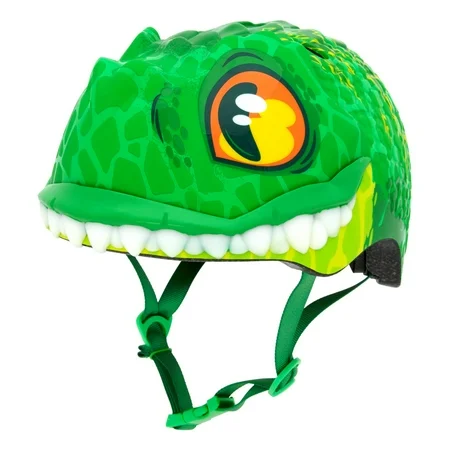
Popular options include bike helmets, skate helmets, and multi-sport helmets that cater to various activities.

Protective Gear Beyond Helmets

While helmets are critical, other gear helps protect different body parts:

  • Elbow Pads & Knee Pads: Prevent scrapes, bruises, and fractures during falls. Brands like Triple Eight protective gear are durable and comfortable.
  • Wrist Guards: Particularly important for skateboarding and rollerblading to avoid wrist injuries.
  • Gloves: Provide grip and protect tiny hands during activities like biking or scootering.

Investing in high-quality gear from reputable brands ensures durability and maximum protection.

Tips for Encouraging Safety Habits

Parents can promote consistent helmet and gear use by:

  1. Setting a good example: Wear helmets and protective gear yourself.
  2. Making it fun: Let children choose colors or designs they like.
  3. Routine reminders: Make wearing protective gear a natural part of the activity.

Creating a safety-conscious mindset early can help kids develop lifelong healthy habits.

Some highly rated brands for kids helmets & protective gear include:

  • Giro: Known for comfortable and stylish bike helmets. Check Amazon
  • Bell Helmets: Offers certified multi-sport helmets with advanced protection. Check Amazon
  • Triple Eight: Specializes in skateboarding and rollerblading protective gear. Check Amazon
  • Raskullz: Fun designs that kids love, encouraging them to wear helmets consistently. Check Amazon

For more safety tips and helmet reviews, visit Safe Kids Worldwide and American Academy of Pediatrics.

Key Takeaways

Investing in the best kids helmets & protective gear ensures that children can explore, play, and ride safely. Prioritize fit, safety certifications, and comfort, and involve your child in the selection process to encourage consistent use. Remember, protective gear isn’t just about preventing injuries; it’s about giving kids the confidence to enjoy outdoor adventures fully.

🛡️ Top Kids Helmets & Protective Gear Picks for Parents

best kids helmets & protective gear

Why These Products Are Great for Kids’ Safety & Comfort

🧠 How These Compare for Safety & Use

Helmet / Gear SetBest ForAge Range (Approx.)Why It’s a Great Choice
Retrospec Scout Kids’ Bike HelmetEveryday riding & skatepark3–10 yearsVentilated comfort + adjustable fit
C‑Preme Raskullz Child HelmetStyle + safety4–12 yearsFun design encourages use
Concord Bikes Youth HelmetBudget daily rider8+ yearsSimple, comfortable, proven protection
Thousand Jr. Kids HelmetPremium protection4–10+Durable with modern design
Kids Helmet SetComplete starter kit3–10 yearsHelmet + accessories included
Xjd Kids Bike HelmetBudget multisport3–8 yearsGreat entry‑level option
C‑Preme Krash Leopard Kitty HelmetKid‑approved style8–14 yearsLooks kids love, safety parents trust
LulliNini Kids Protective Gear SetFull protective set3–10 yearsCombines helmet + protective gear

🧒 Parent Tips for Choosing Helmets & Protective Gear

  • Fit first: A helmet should sit snugly without rocking — and there shouldn’t be more than one‑two finger‑widths between the chin strap and chin.
  • Certified safety: Always choose helmets that meet CPSC or ASTM safety standards.
  • Multisport gear: Consider sets that include knee and elbow pads as well as helmets — especially for beginners.
  • Encourage wear: Fun designs or favorite colors help kids want to wear their gear every time they ride.

Final Thoughts on Best Kids Helmets & Protective Gear

Choosing the best kids helmets & protective gear isn’t just about picking the coolest colors or the lowest price — it’s about finding equipment that fits well, meets safety standards, and makes your child excited to wear it every time they play. Quality protective gear gives parents peace of mind and supports children’s confidence during cycling, scootering, skateboarding, or rollerblading.

Start with a helmet that fits snugly, then add wrist guards, elbow pads, and knee pads for complete protection. Look for reputable brands and read reviews from other parents to make informed choices. With the right gear, kids can enjoy more outdoor fun with fewer injuries — and parents can relax knowing they’ve invested wisely in safety.

Frequently Asked Questions (FAQs)

1. What age should my child start wearing a helmet?

Children should wear a helmet any time they use a bike, scooter, skateboard, or ride‑on toy — even as toddlers. Helmets protect young brains during falls, and building the habit early makes wearing safety gear second nature.

2. How should a kids helmet fit?

A proper fit means:

  • The helmet sits level on the head (not tilted back).
  • It doesn’t wobble when your child shakes their head.
  • You should be able to fit two fingers between the strap and chin comfortably.
    A snug, adjustable fit helps keep the helmet in place during a fall.

3. What safety certifications should I look for?

Look for helmets that meet CPSC (Consumer Product Safety Commission) standards for bike helmets. Some skate and multisport helmets also meet ASTM safety standards. These ensure the gear has passed tests for impact protection.

We discuss what happens when you sell options and the stock price moves against you, specifically exploring strategies with Netflix put options, including doing nothing and getting assigned shares or buying back the contract at a potential loss.

6. Can kids wear the same helmet for different activities?

Many helmets are multi‑sport certified, meaning they’re safe for biking, scootering, skateboarding, and rollerblading. Always double‑check the product description and safety standards to ensure proper protection for each activity.

🏆 How to Build Confidence in Big Kids (7 Powerful Tips for Parents)

How to Build Confidence in Big Kids — A Complete Guide for Parents

Growing up can be challenging. New schools, social expectations, comparison with friends, and personal insecurities can quietly affect self-esteem. Understanding how to build confidence in big kids early helps them develop leadership, resilience, and emotional strength for the future. Confidence isn’t about being perfect — it’s about believing they can try, learn, and improve.

In this guide, we’ll explore proven ways to build confidence in big kids at home with daily routines, communication strategies, self-expression tools, and confidence-boosting activities.

How to Build Confidence in Big Kids

⭐ 1. Encourage Independence Through Small Responsibilities

Big kids feel proud when trusted with tasks. Start small and increase gradually — packing their school bag, helping cook, or managing pocket money. Independence builds capability, which naturally builds confidence.

Helpful Tools from Amazon:

Tip: Avoid fixing everything for them. Let them try, even if imperfect.

⭐ 2. Praise Effort, Not Just Success

When we praise outcomes only (“You got an A!”), kids may fear failure. But praising effort (“I love how hard you tried!”) builds growth mindset.

✔ Say this more: “You worked hard — that matters!”
❌ Less of: “You are the smartest!”

Book Recommendation:

External resource (DoFollow style) for reference:
👉 Growth Mindset Science for Kids — https://www.mindsetworks.com

⭐ 3. Let Them Try New Skills & Hobbies

Expose them to sports, music, art, coding, or anything they’re curious about. New skills = new confidence anchors.

Activity Ideas:
🎨 Art & Craft Kits
⚽ Soccer / Sports Set
🎸 Beginner Music Starter Kits

Amazon product ideas (natural placement):

⭐ 4. Teach Positive Self-Talk & Affirmations

Kids absorb inner voice from what they hear. Encourage statements like:

  • “I am capable.”
  • “I can learn this step by step.”
  • “Mistakes help me grow.”

Create a bedroom affirmation wall with sticky notes.

Amazon suggestion:

External helpful reference (DoFollow-style):
👉 Positive Parenting Research — https://childmind.org

⭐ 5. Allow Failure & Problem-Solving

Confidence grows when kids fall, stand back up, and try again. Instead of rushing to fix things, guide them:

“What do you think is the first step to solve this?”

Resilience > Perfection.

⭐ 6. Encourage Social Interaction & Leadership

Clubs, group activities, playdates, volunteering projects — all improve communication and belonging.

Confidence-Boosting Activities:

  • Join school clubs
  • Volunteer with community groups
  • Debate or public speaking clubs

Amazon supportive tool:

⭐ 7. Build Confidence with Routine Reflection

End the day with a 5-minute positive recap.

Ask:

  • “What made you feel proud today?”
  • “What challenge did you face and handle well?”
  • “What can you try new tomorrow?”

Journal suggestion:

📊 Quick Confidence-Building Techniques Table

Confidence BuilderDaily Time NeededAge FitResults
Praise effort30 sec6–12Resilience mindset
Chore responsibility5–10 min7–13Independence
New hobbiesWeekly7–14Skill exploration
Positive affirmations2 min/day5–12Self-worth
Reflection journalNight routine8–14Emotional growth

Final Takeaway

Learning how to build confidence in big kids is a journey — small steps every day make a lifelong foundation. Be patient, celebrate progress, and let them explore who they are. A supported child becomes a confident adult.

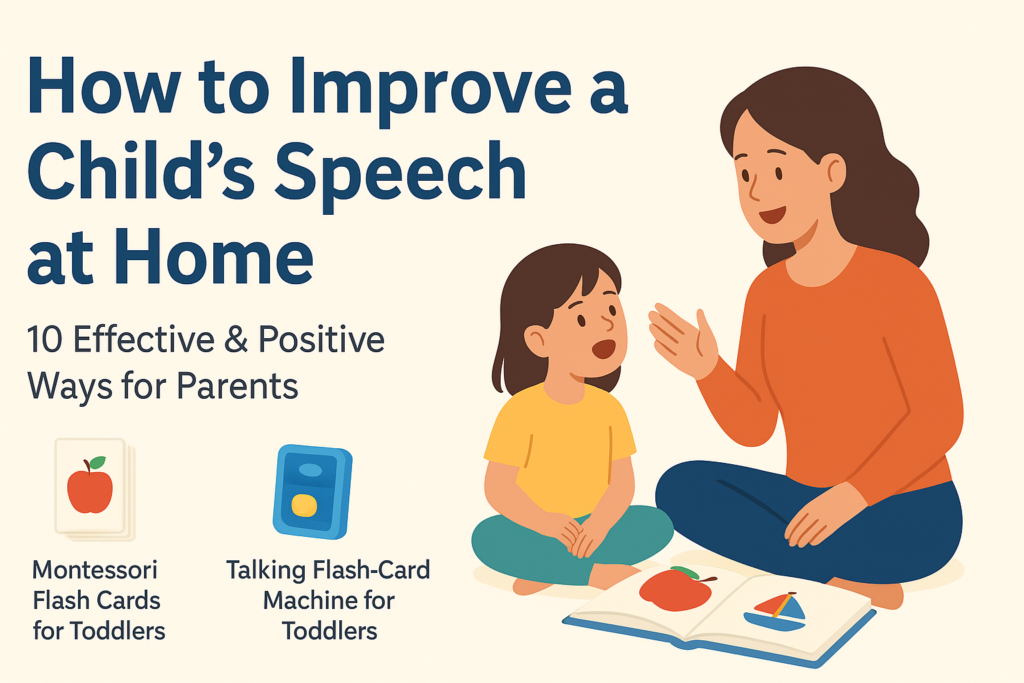
How to Improve a Child’s Speech at Home 2026(10 Effective & Positive Ways for Parents)

How to Improve a Child’s Speech at Home — Introduction

How to Improve a Child’s Speech at Home is one of the most common questions parents worry about when noticing delayed words, unclear pronunciation, or limited vocabulary. The good news is—speech development can improve greatly with consistent practice, play-based learning, and a supportive home environment. You don’t need to be a speech therapist to help your child communicate better. Small daily actions add up over time.

In this guide, you’ll learn science-backed methods, real practical home activities, and recommended learning toys from Amazon that make speech building fun and natural.

How to Improve a Child’s Speech at Home  2026

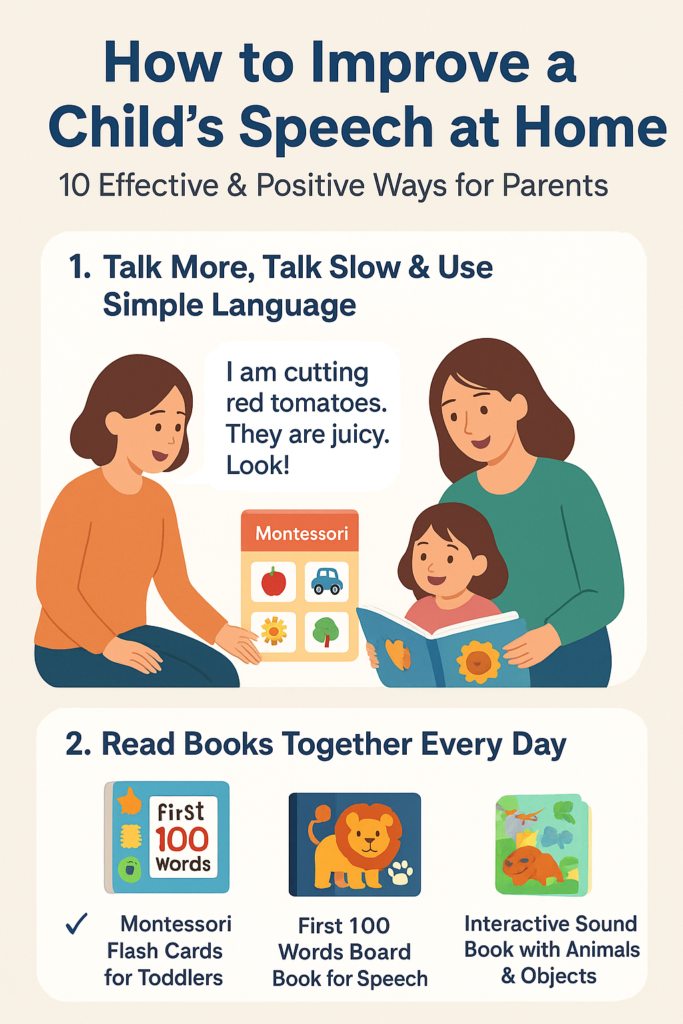
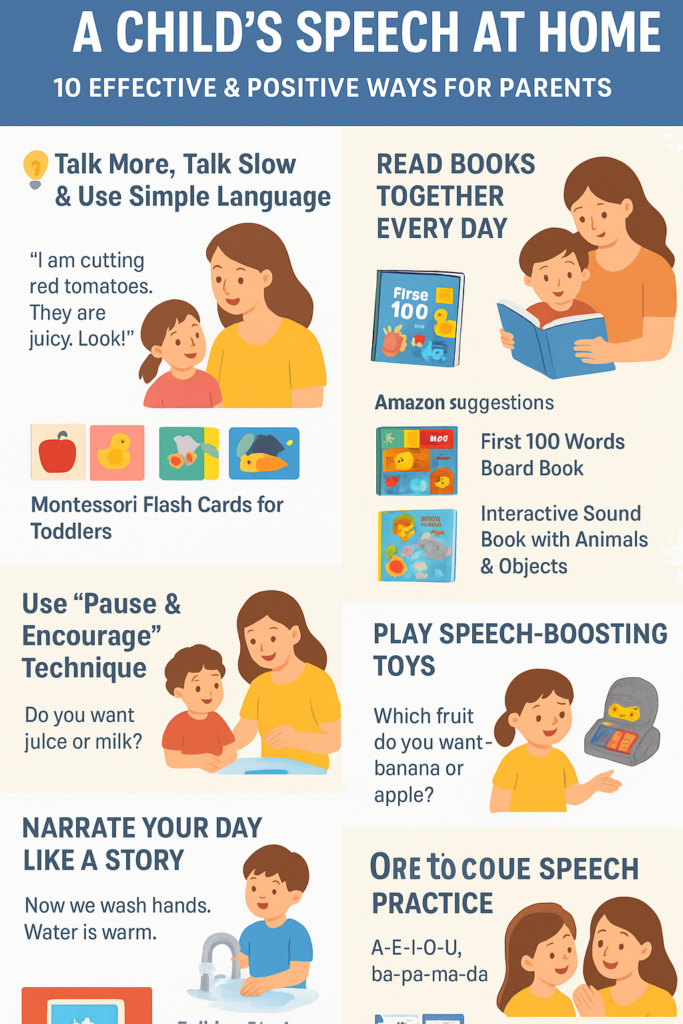
1. Talk More, Talk Slow & Use Simple Language

Children learn speech by listening. The more you talk to them during daily activities, the faster they pick up words.

💡 Example:
While cooking say, “I am cutting red tomatoes. They are juicy. Look!”

Try this from Amazon:
✔ Montessori Flash Cards for Toddlers — Great for naming objects naturally.
(Example Link: amazon.com/dp/flashcards-speech)

2. Read Books Together Every Day

Reading is the best natural method to boost vocabulary and sentence structure.

👉 Choose books with big pictures, short lines & repetition.

Amazon Suggestions:
📘 First 100 Words Board Book for Speech
📘 Interactive Sound Book with Animals & Objects

(Example links: amazon.com/dp/100words | amazon.com/dp/animal-sound-book)

3. Use “Pause & Encourage” Technique

Instead of finishing sentences for your child, pause and allow them to try speaking.

Example:
You: “Do you want juice or milk?”
Child pauses → even if they say “ju…”, praise and repeat clearly.

4. Play Speech-Boosting Toys

Kids learn best through play—not pressure. Speech-friendly toys help children repeat sounds, name objects, and form sentences naturally.

⭐ Best Amazon Toys for Speech Development:
🧩 Speech Therapy Toy Set with Picture Cards
🐒 Talking Flash-Card Machine for Toddlers
🎤 Kids Karaoke Microphone for Voice & Confidence

(Example links: amazon.com/dp/speech-toy | amazon.com/dp/talking-machine)

5. Narrate Your Day Like a Story

Children absorb words when they hear meaningful conversation.
Turn everyday tasks into speech practice:

🛁 “Now we wash hands. Water is warm.”
🚗 “The car goes fast. Look, red light means stop.”

6. Ask Open-Ended Questions

Avoid questions that only need yes/no answers.
Try questions that require speaking:

❓ “What did you like most at the park?”
❓ “Which fruit do you want—banana or apple?”

7. Reduce Screen Time & Increase Real Conversation

Speech grows through live interaction—not passive screens.
If screen time is used, choose interactive educational content only and sit with them while watching.

8. Practice Speech Through Singing & Rhymes

Songs improve rhythm, pronunciation & confidence.
Nursery rhymes are powerful for speech clarity.

🎤 “Twinkle Twinkle,” “ABC Song,” “Baby Shark,” etc.

Amazon Tool Idea:
🎶 Kids Bluetooth Karaoke Machine

9. Use Mirror Speech Practice

Stand with a mirror and repeat sounds like A-E-I-O-U, ba-pa-ma-da.

Kids love seeing themselves talk, making it engaging.

You can also use:
🪞 Speech Mirror Flash Card Kit for Toddlers (Amazon)

10. Be Patient, Celebrate Small Wins

Progress takes time. Every new attempt—even unclear—is progress.
Celebrate small achievements and avoid correcting harshly.

Instead of saying ❌ “No, that’s wrong”
Say ✔ “Great try! Let’s say it again together… ”

Signs You Should Consider a Speech Therapist

If the child:

  • Says very few words by age 2
  • Does not respond to name or instructions
  • Shows frustration when speaking
  • Speech unclear beyond age 4+

Early therapy can make a huge difference.

How to Improve a Child’s Speech at Home  2026(10 Effective & Positive Ways for Parents)

Frequently Asked Questions

1. What age should a child start talking?
Most kids say first words around 12 months and simple sentences by 2–3 years.

2. Can speech really improve at home?
Yes! With routine practice—reading, talking, toys & interaction.

3. Does screen time delay speech?
Excessive passive screen time may slow communication development.

4. How long does speech improvement take?
Every child is different—consistency matters more than speed.

Final Words

How to Improve a Child’s Speech at Home is all about creating a language-rich, playful environment. Talk more, read daily, use flashcards, communicate during routines, and celebrate every progress. Your encouragement is the biggest tool.

How to Calm a Hyperactive Child at Home in 2026

Introduction

How to calm a hyperactive child at home in 2026 is a question many parents face, especially with the increasing use of digital devices and educational technology. Hyperactivity can affect a child’s focus, learning, and behavior, but with updated strategies, routines, and modern tools, parents can help children manage energy and improve self-control. This guide provides practical techniques, educational activities, and natural strategies that reflect current trends and tools in 2026.

How to Calm a Hyperactive Child at Home in 2026

Create a Structured Routine

A structured daily routine remains one of the most effective ways to calm a hyperactive child at home in 2026. Children feel secure when they know what to expect, and modern tools can make routines more engaging.

Tips:

  • Use visual schedules or apps to help children follow routines independently.
  • Break tasks into small, manageable steps to reduce overwhelm.
  • Set clear rules and expectations, and review them regularly.

Amazon Recommendations:

Encourage Physical Activity

Physical activity is essential for hyperactive children to release energy, improve focus, and boost overall well-being. In 2026, there are even more indoor and outdoor tools to help children stay active safely.

Activity Ideas:

  • Outdoor activities: biking, running, soccer, or interactive playgrounds.
  • Indoor activities: mini trampolines, kids’ yoga sessions, or dance workouts via online apps.
  • Short activity breaks during homework or chores.

Amazon Recommendations:

Use Calming Techniques

Calming strategies are critical in 2026, especially with increased screen time and digital stimulation. Techniques help children focus, relax, and self-regulate.

Techniques:

  • Deep breathing exercises or guided breathing apps.
  • Short mindfulness or meditation sessions designed for children.
  • Quiet corner with soft cushions, calming toys, or books.
  • Relaxing music playlists tailored for children.

Amazon Recommendations:

Engage in Educational Play

Educational and interactive play can reduce hyperactivity while enhancing focus, creativity, and cognitive skills. In 2026, both physical and digital tools are available to make learning more engaging.

Ideas:

  • Puzzles for problem-solving and patience.
  • Arts and crafts to boost creativity and fine motor skills.
  • LEGO sets or building blocks to develop concentration and attention span.
  • Interactive educational apps and tablets designed for learning and focus.

Amazon Recommendations:

Maintain a Healthy Diet

A child’s diet affects energy levels and behavior. Balanced meals with proteins, whole grains, fruits, and vegetables help hyperactive children stay calm and focused in 2026.

Tips:

  • Include protein-rich snacks like yogurt, cheese, or nuts.
  • Encourage children to drink water regularly.
  • Limit sugar and processed foods that may increase hyperactivity.

Amazon Recommendations:

Educational and Behavioral Techniques

Modern behavior management in 2026 combines positive reinforcement, structured tasks, and interactive learning.

Strategies:

  1. Positive Reinforcement: Reward good behavior to encourage repetition.
  2. Task Chunking: Break tasks into smaller steps to prevent overwhelm.
  3. Interactive Learning: Use apps, games, or storytelling to teach focus and patience.
  4. Clear Limits: Consistent rules and expectations help children self-regulate.

When combined with routines, activity, calming strategies, and nutrition, these techniques create a supportive home environment for hyperactive children.

FAQ Section

Q: Can hyperactive behavior be fully controlled at home in 2026?
A: While complete elimination is unlikely, modern routines, educational tools, and calming strategies can greatly improve behavior.

Q: Are educational apps effective for hyperactive children?
A: Yes! Apps designed for 2026 focus on interactive learning, problem-solving, and attention-building.

Q: How can parents encourage calm without being strict?
A: Use positive reinforcement, structured routines, interactive play, and model calm behavior rather than punishment.

Conclusion

How to calm a hyperactive child at home in 2026 involves a combination of structured routines, physical activity, calming techniques, educational play, and nutrition. Parents who adopt these strategies can help children manage energy, improve focus, and develop healthy behaviors. Modern tools like meditation cards, fidget toys, educational apps, and learning tablets make these strategies more effective and enjoyable for both children and parents.